
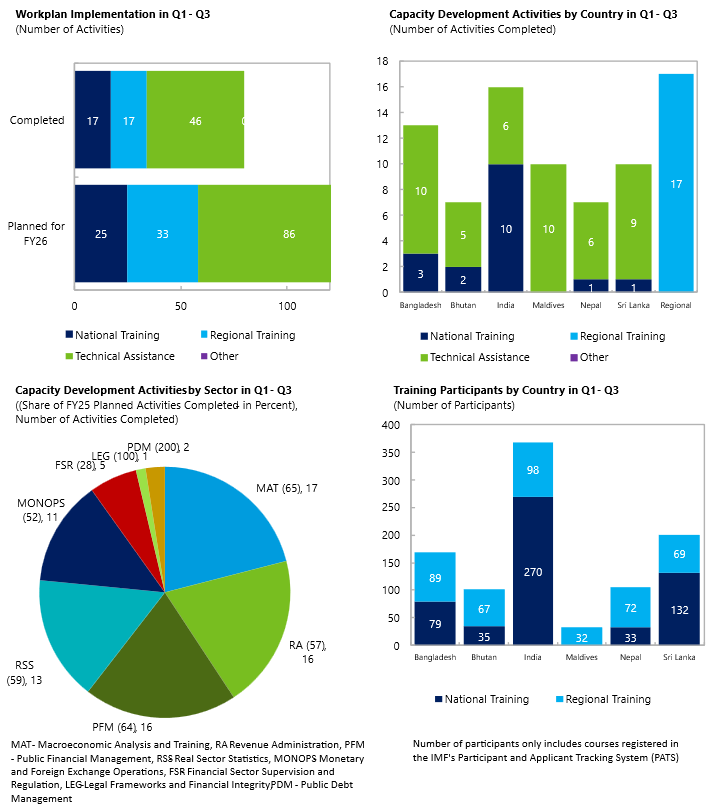
During the third quarter of FY26 (November 2025–January 2026), SARTTAC continued to deliver strong capacity development (CD) across South Asia. Regional and tailored national training, webinars and seminars, and technical assistance were delivered to SARTTAC member countries. This comprised 11 technical assistance (TA) missions and scoping visits and 11 training courses/workshops, at the regional and national level.
SARTTAC hosted several high-level visits from the IMF headquarters. Mr. Krishna Srinivasan, Director of the IMF Asia Pacific Department visited SARTTAC in November 2025, delivering a lecture on the regional economic outlook in the macroeconomic course for Indian IES officers. Furthermore, Ms. Catriona Purfield, Director of the IMF Institute for Capacity Development (ICD), conducted a two-days visit to SARTTAC, engaging and discussing on the work of the Center and CD priorities.
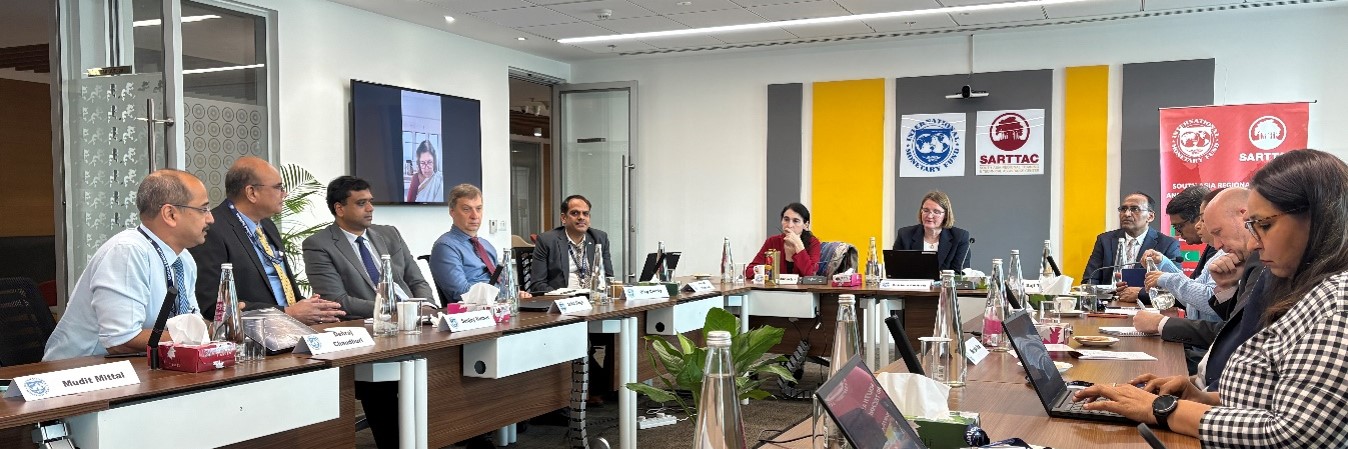 SARTTAC staff meeting with Ms. Catriona Purfield, Director of the IMF Institute for Capacity Development (ICD)
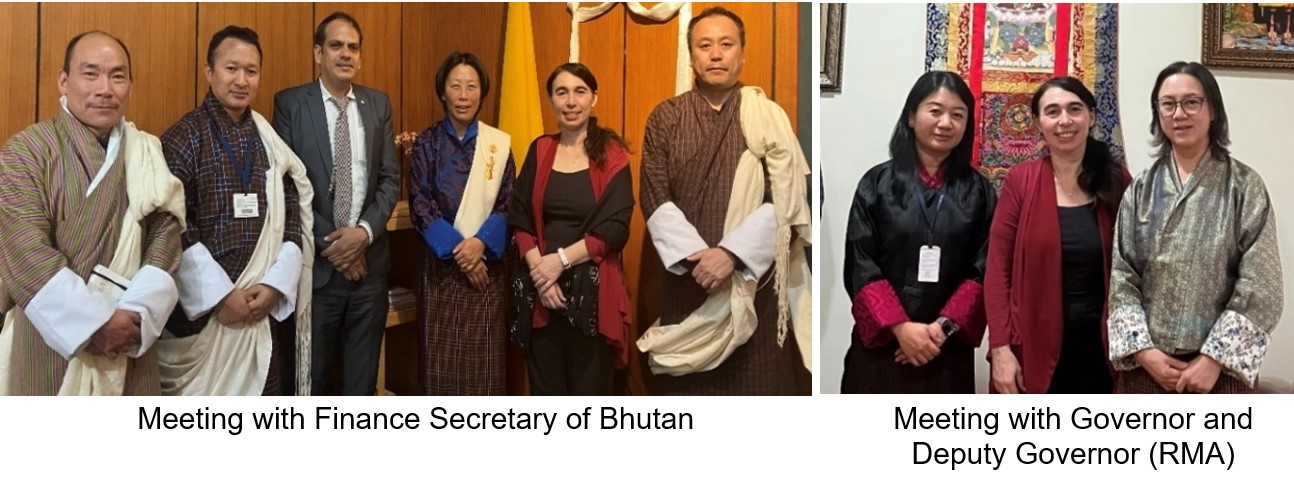
SARTTAC Director conducted missions to Bhutan and Nepal to discuss CD needs and priorities. Ms. Albertin, SARTTAC Director, conducted missions to Bhutan and Nepal and held productive discussions with senior counterparts, including the Ministry of Finance, central banks, revenue authorities, and national statistics offices. Discussions focused on agencies’ CD priorities and ways to further deepen SARTTAC’s collaboration with member countries (MCs).
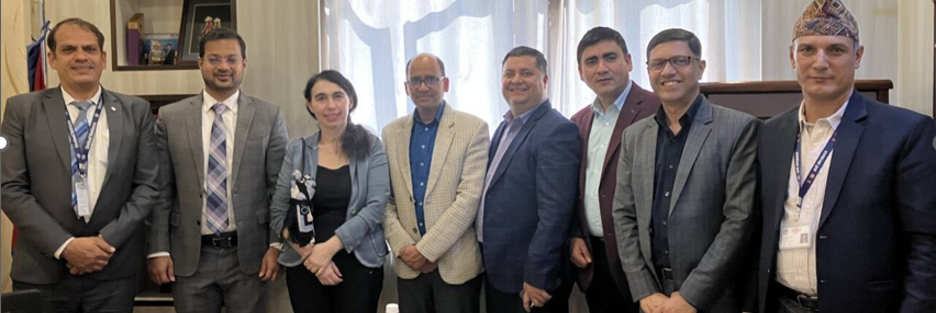 Meeting with MOF, Nepal
An in-person training was delivered by the IMF Mediation Office in December 2025 at SARTTAC, the first conducted in an IMF regional capacity development center in Asia. Ms. Geetha Ravindra, IMF Mediator and Head of the IMF Mediation Office, delivered an interactive training at SARTTAC premises to the staff of SARTTAC and the IMF Resident Representative Office for India. This focused on communication, conflict resolution, and collaborative work practices.
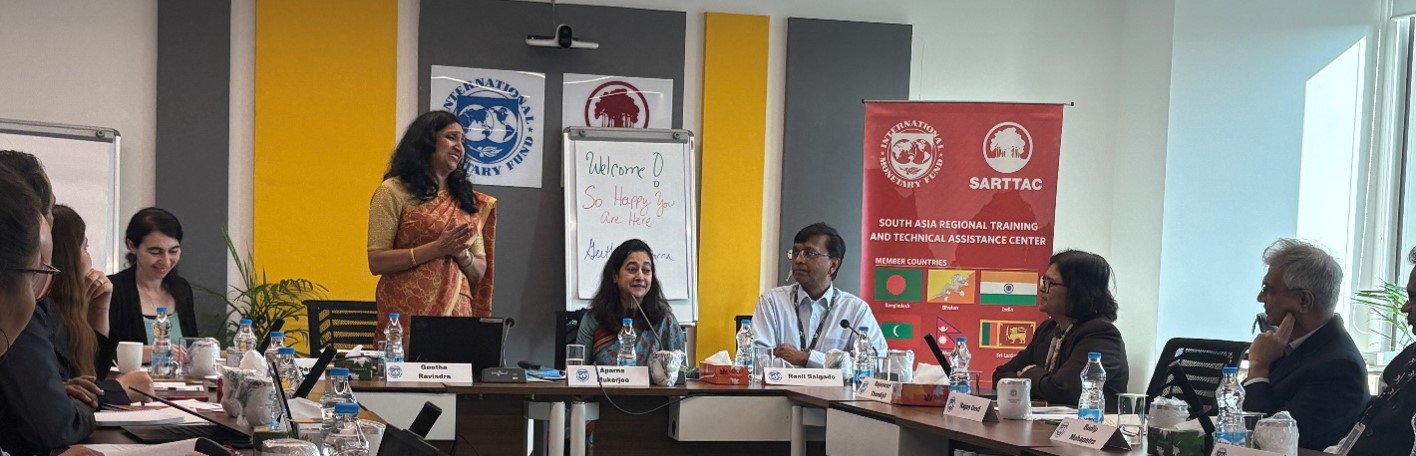 Mediation training for SARTTAC and the Office of Resident Representative-India staff
A regional training on Navigating eCommerce and Customs was delivered in collaboration with the IMF Fiscal Affairs Department, supported by the Government of Japan. The event (November 10-14, 2025) enhanced participants’ understanding of eCommerce models, implications of customs regulations, and the importance of collaboration among stakeholders. Key sessions covered trends in eCommerce, risk management, and technological advancements in customs clearance.
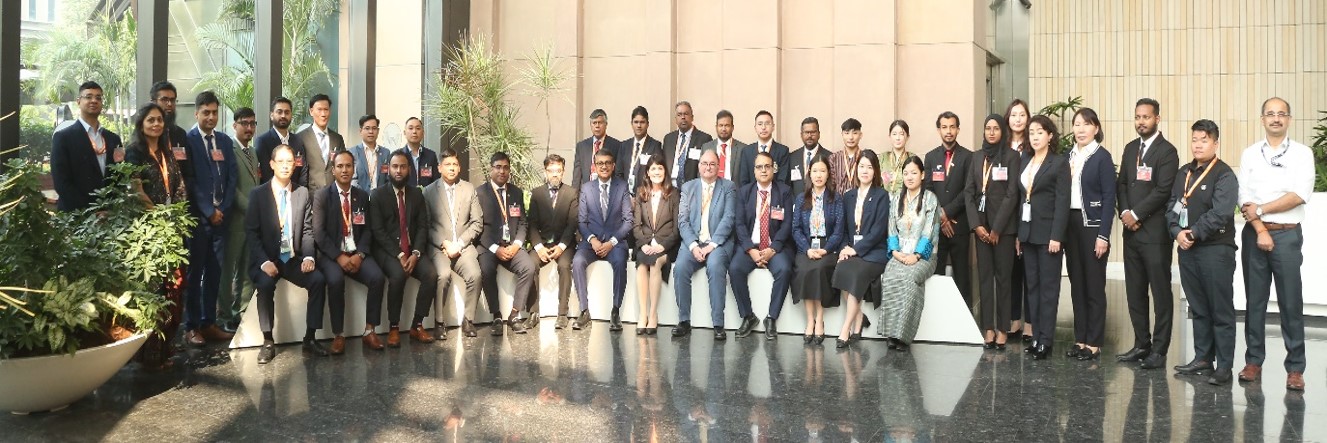 Navigating eCommerce and Customs (November 10 - 14, 2025)
A regional training course on the Compilation of the Producer Price Index (PPI) was delivered. The course (December 1–5, 2025) emphasized updating samples and weights, price collection, index calculation, and expanding the coverage of economic activities under the PPI. SARTTAC also conducted a TA mission on Tourism Satellite Accounts (TSA) to Nepal (November 24–28, 2025) assisting the National Statistics Office in developing TSA frameworks, including TSA tables, key data sources, and practical implementation within the supply and use tables (SUT) framework.
A Public Financial Management scoping mission was conducted to the state of Uttar Pradesh in India. The mission (January 8–9, 2026) assessed reform priorities and explored opportunities for future subnational engagement. In addition, officials from SARTTAC member countries attended a Public Investment Management (PIM) course (November 17-21, 2025) covering medium term fiscal planning for public investment, project appraisal and selection (including climate considerations), public private partnerships, maintenance funding, and PIM monitoring and oversight.
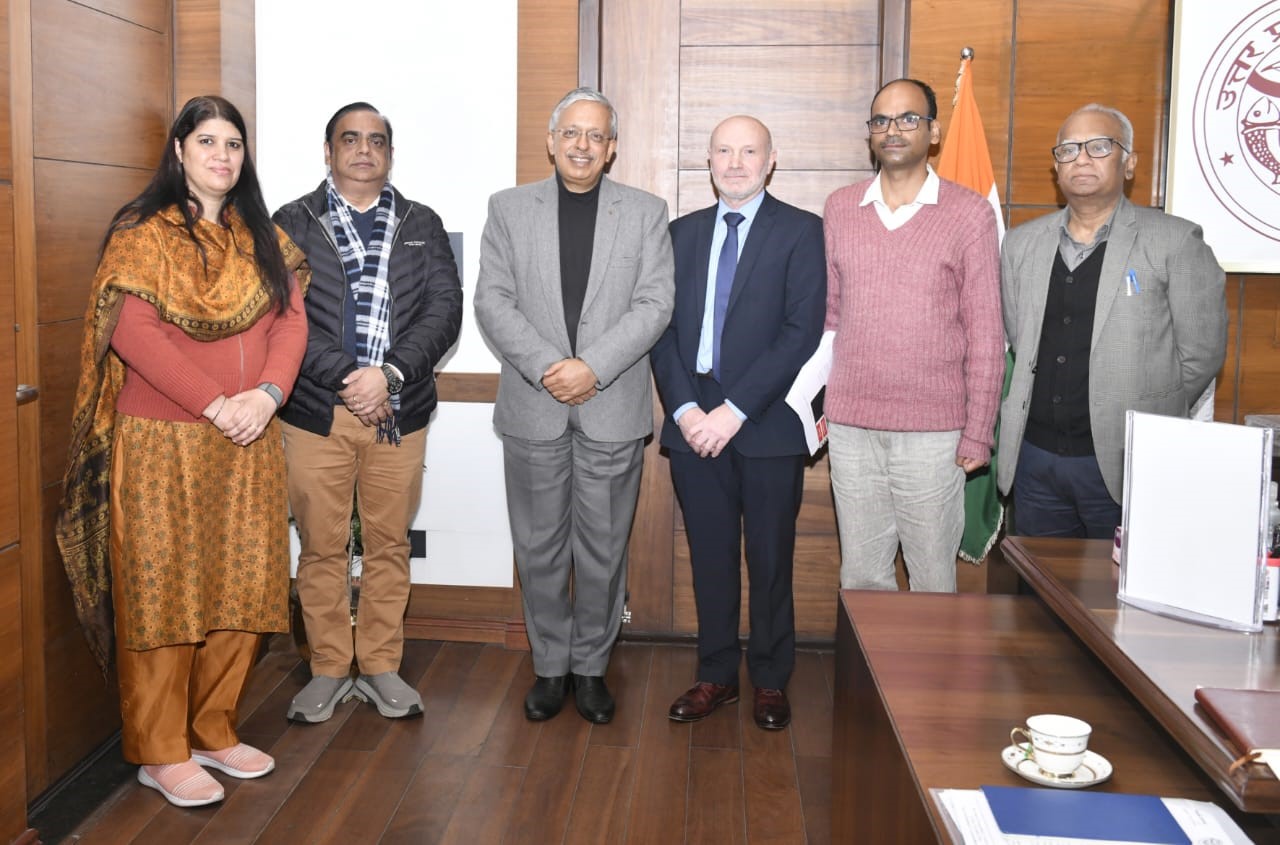 Meeting with Chief Secretary, Uttar Pradesh, India
A training on Anti Money Laundering and Countering the Financing of Terrorism (AML/CFT) (January 19–23, 2026) was delivered by the IMF Legal Department in partnership with the Asia/Pacific Group on Money Laundering. The course strengthened participants’ understanding of the Financial Action Task Force (FATF) Standards through a combination of lectures and hands-on exercises.
Targeted missions were conducted to discuss supervisory capacity in the region and discuss TA needs. In Nepal, a one-day‑ scoping mission (November 7, 2025) was conducted, with high‑level discussions with the Nepal Rastra Bank on regulatory and supervisory priorities. In Bhutan, a mission (November 10–14, 2025) reviewed progress made by the Royal Monetary Authority towards Risk Based Supervision (RBS) of banks and identifying associated challenges. In Maldives, a mission (November 30 - December 4, 2025) assisted the Maldives Monetary Authority in strengthening insurance regulation and supervision and reviewed progress in RBS implementation. SARTTAC also delivered a Regional Seminar on Risk ‑Based Supervision for Executive Directors and Senior Managers (January 13–15, 2026) in Thimphu, Bhutan. The seminar strengthened senior supervisory managers’ understanding of RBS and practical considerations of RBS implementation.

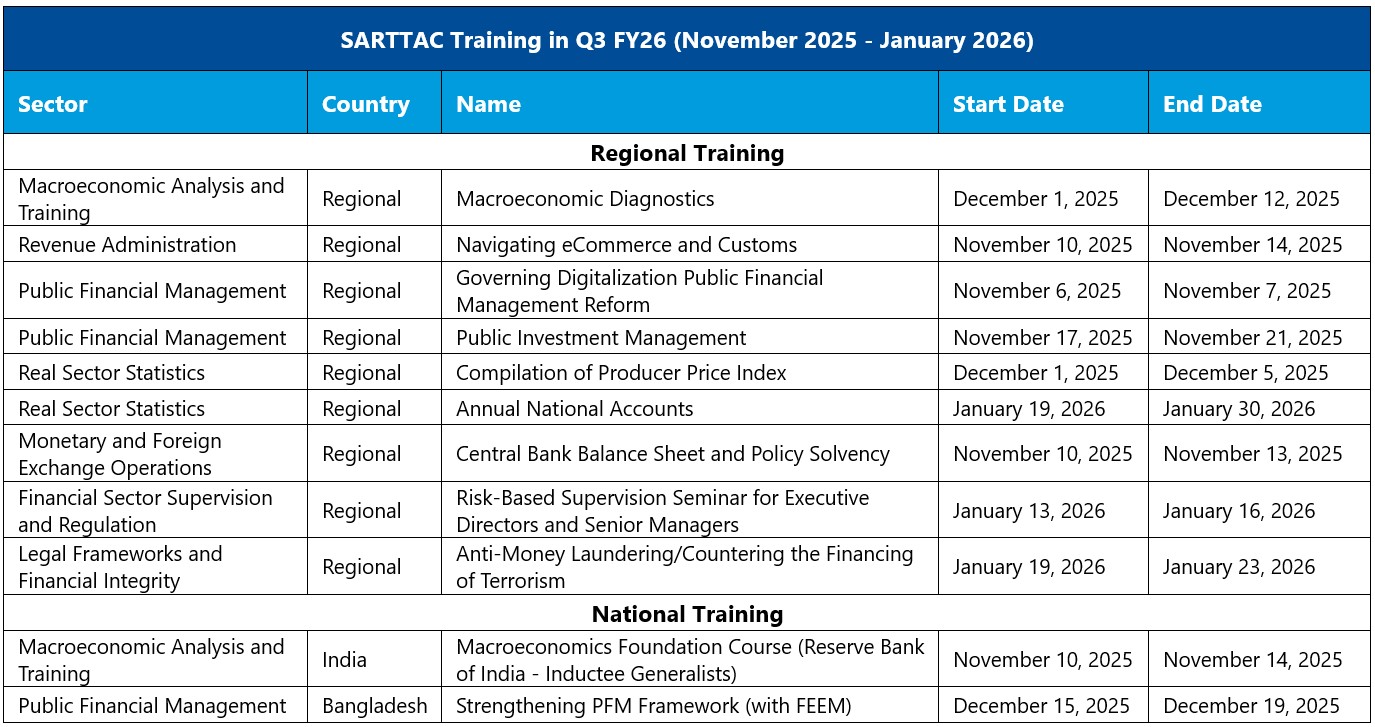
During the third quarter of FY26, SARTTAC delivered a total of 11 training courses. This included nine regional courses and two national trainings to address country specific CD needs.
- SARTTAC, in collaboration with the IMF Fiscal Affairs Department and the Capacity Development Office in Thailand (CDOT), delivered a high‑level regional forum on ‘Digital Horizons-Transforming Public Financial Management for Tomorrow’ in Tokyo (November 6–7, 2025). The forum brought together senior officials from ministries of finance across South and Southeast Asia to discuss strategic approaches to governing digital transformation in public financial management. Discussions focused on leadership and institutional change, digital governance, and the effective use of emerging technologies to strengthen fiscal performance and service delivery. More details on this event can be accessed here.
- A regional training on Public Investment Management (PIM) was organized at SARTTAC. The training (November 17–21, 2025) strengthened the understanding of mid‑level officials from ministries of finance and planning agencies of good practices in planning, appraisal, selection, and oversight of public investment projects. The training looked at practical application of PIM principles, including medium‑term fiscal planning for public investment, incorporation of climate considerations, and the management of public‑private partnerships.
- SARTTAC delivered a regional AML/CFT Standards Training Course for mid‑level officials from across South Asia. The course (January 19–23, 2026) was delivered by the IMF’s Legal Department in partnership with the Asia/Pacific Group on Money Laundering (APG) and focused on strengthening participants’ understanding and practical application of the Financial Action Task Force (FATF) Standards. The training covered key elements of the FATF framework, including national risk assessment and coordination, preventive measures, beneficial ownership transparency, risk‑based supervision, financial intelligence, investigation and prosecution of money laundering and terrorist financing, asset confiscation, international cooperation, and targeted financial sanctions. Dedicated sessions also addressed emerging risk areas such as virtual assets and proliferation financing.
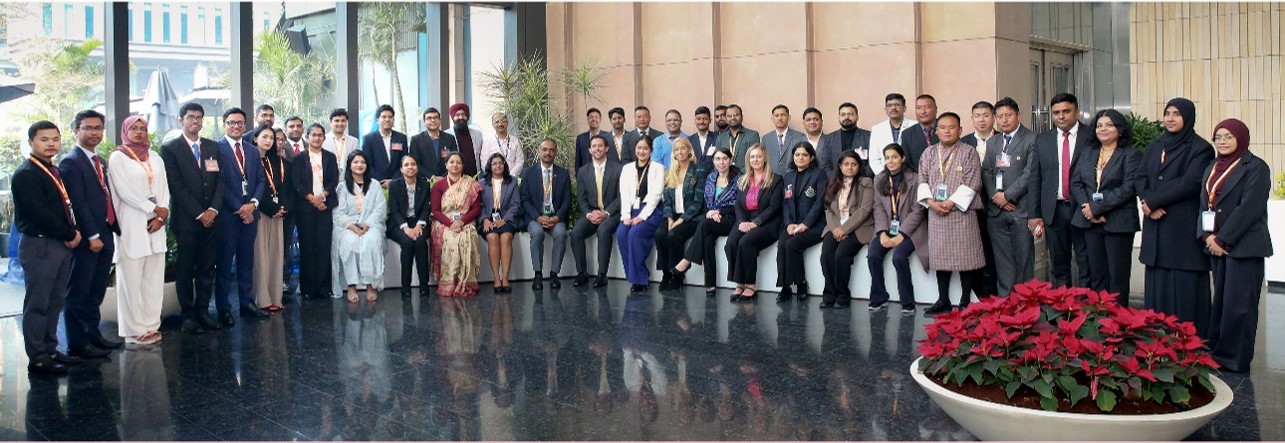 AML/CFT Standards Training Course (January 19–23, 2026)
- SARTTAC and the CDOT jointly delivered a regional training course on Central Bank Balance Sheet and Policy Solvency. It strengthened central bank officials’ understanding of the role of central bank balance sheets in supporting effective monetary policy implementation and financial stability (November 10–13, 2025). The training covered key concepts related to balance sheet structures, policy solvency, stress testing, capital and profit retention policies, and the interaction between monetary and exchange rate policies and central bank finances.
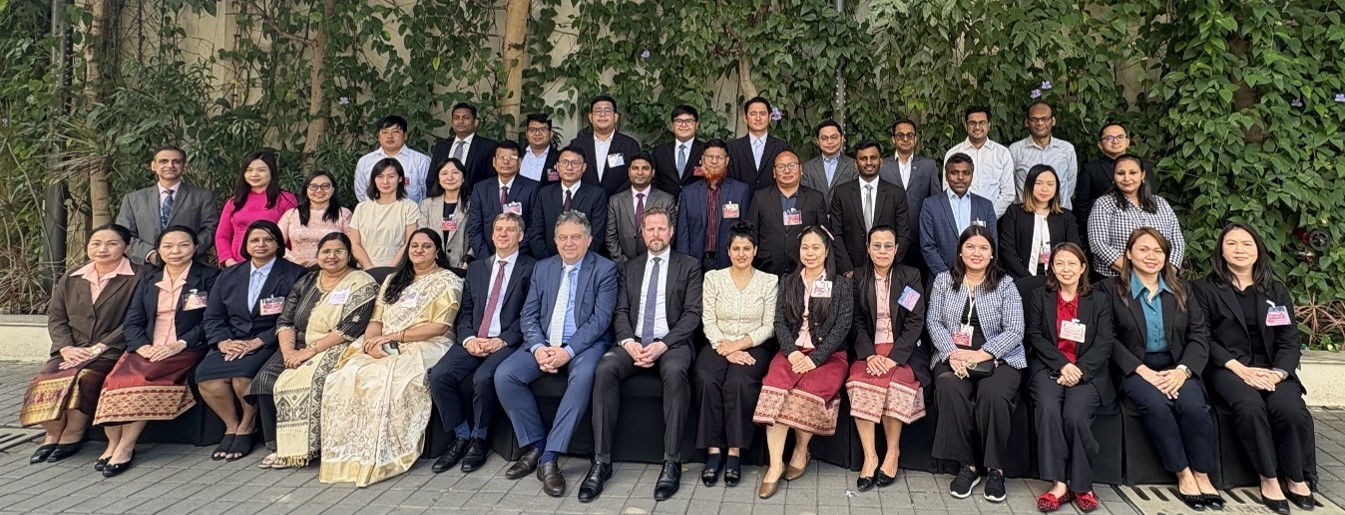 Central Bank Balance Sheet and Policy Solvency (November 10–13, 2025)
- A regional seminar on Risk‑Based Supervision (RBS) for Executive Directors and Senior Managers in Central Banks was delivered in Bhutan. The seminar (January 13–15, 2026) focused on strengthening senior‑level officials’ understanding of the principles and practical implementation challenges of risk‑based supervision, supporting the transition from rules‑based oversight to a forward‑looking, risk‑focused supervisory approach. The program covered key elements of RBS frameworks, including supervisory judgment, governance and quality assurance, alignment with supervisory review processes, and the integration of microprudential and macroprudential perspectives.
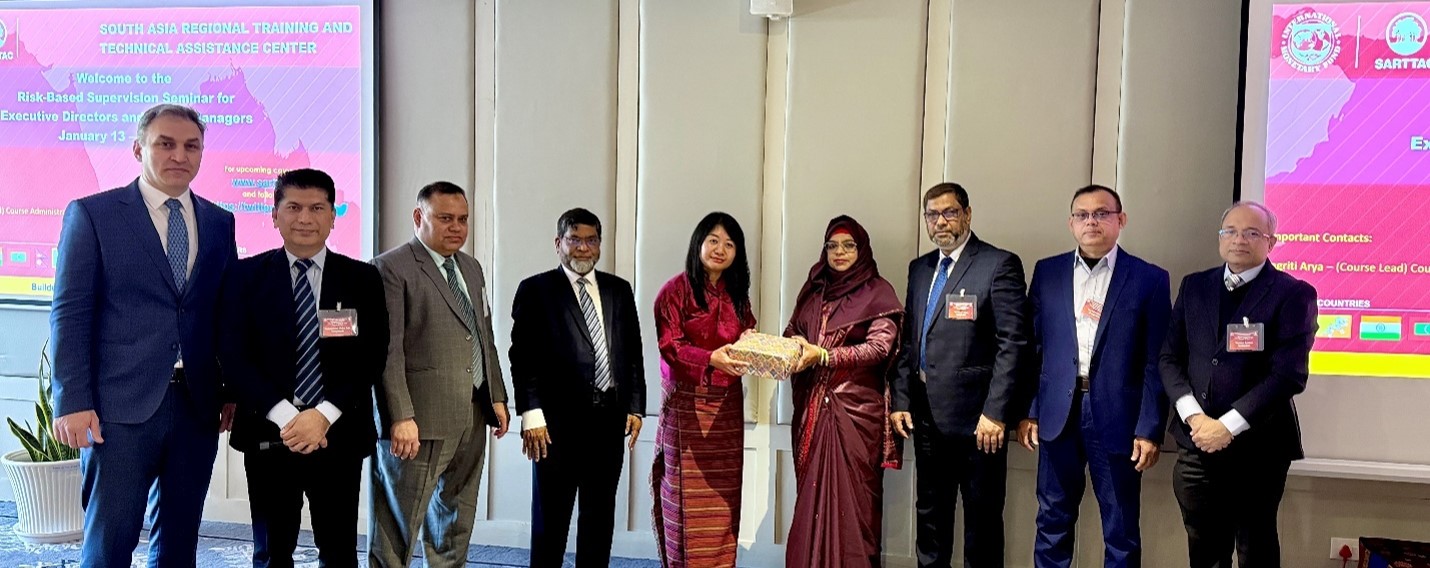 Risk-Based Supervision Seminar for Executive Directors and Senior Managers
(January 13- 15, 2026)
- Two trainings on real sector statistics issues strengthened capacity in compiling price statistics and national accounts across SARTTAC member countries. A regional training on the compilation of Producer Price Indices (PPI) (December 1–5, 2025), focused on international standards, methodological choices, and practical compilation challenges faced by national statistical offices. It was complemented by an advanced regional training on National Accounts Statistics, (January 19–30, 2026) delivered to national accounts compilers, statisticians, and economists from national statistical agencies and central banks. The course covered advanced topics under the 2008 System of National Accounts (SNA) and key developments introduced in the 2025 update of the SNA, including updated guidance on volume and price measures, supply and use tables, input‑output frameworks, capital measurement, and the treatment of emerging economic activities, as well as selected “beyond GDP” themes.
- Two courses on macroeconomic issues were delivered, addressing both national and regional capacity‑building needs. A national course on Selected Macroeconomic Issues (November 10–14, 2025) was delivered for Reserve Bank of India (RBI) general inductees. The course was tailored for officials with diverse professional backgrounds and focused on strengthening understanding of core macroeconomic concepts and analytical tools relevant for central banking. The program covered macroeconomic frameworks, monetary and fiscal policy analysis, inflation dynamics, macro‑financial linkages, external sector assessment, and public debt sustainability, with applications drawn from the Indian context. During the training Mr. Krishna Srinivasan, Director of the IMF APD, presented the latest IMF World Economic Outlook to the participants.
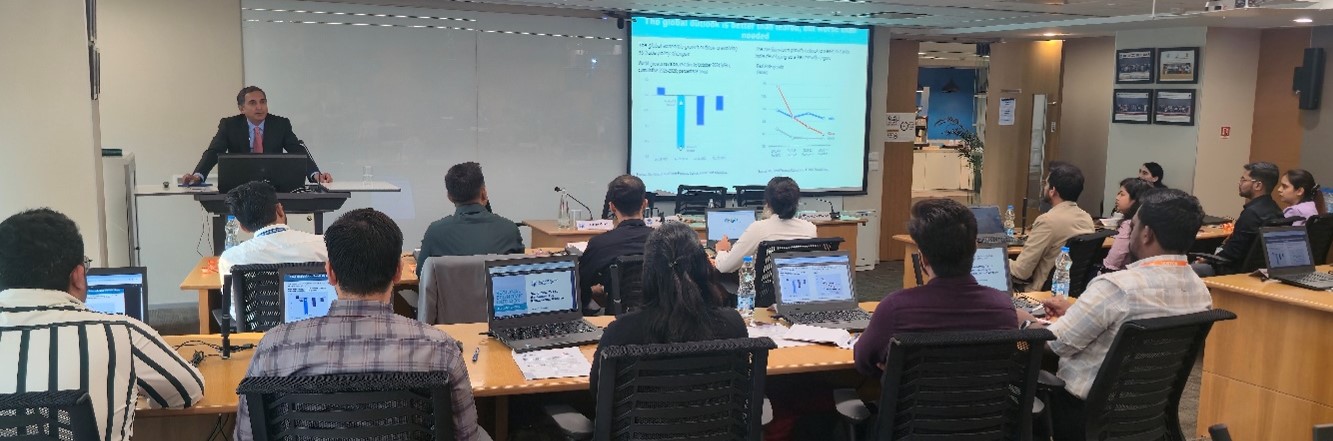 Mr. Krishna Srinivasan, Director of the IMF APD, presented the latest IMF World Economic Outlook to the participants of Selected Macroeconomic Issues (November 10–14, 2025)
This was followed by a regional course on Macroeconomic Diagnostics, (December 1–12, 2025). The course strengthened participants’ ability to diagnose macroeconomic conditions using practical tools applied by IMF economists. The program covered short‑ and medium‑term macroeconomic analysis, including growth and output gaps, inflation dynamics, monetary and fiscal policy stance and transmission, macro‑financial linkages, external sector vulnerabilities, and public and external debt sustainability.
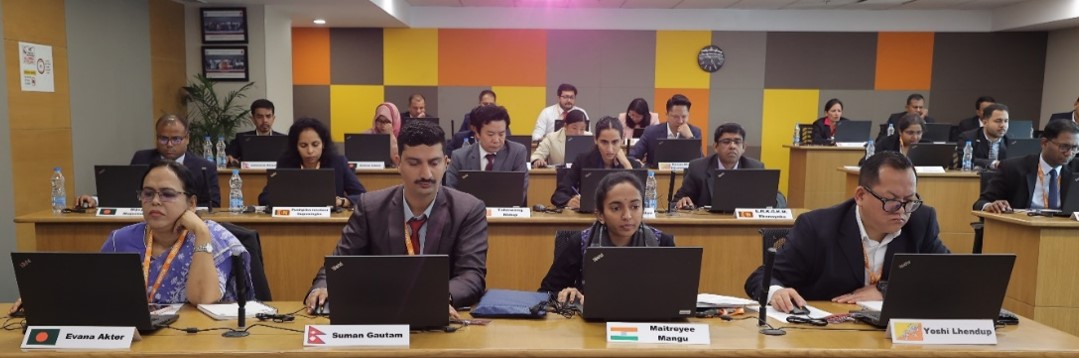 Regional course on Macroeconomic Diagnostics, (December 1–12, 2025)
- A national training on Strengthening PFM Frameworks was delivered as part of SARTTAC’s ongoing collaboration with Bangladesh’s Institute of Public Finance under the Fiscal Economics and Economic Management (FEEM) program. The training (December 15–19, 2025) covered core PFM topics, including macro‑fiscal frameworks, strategic budgeting, medium‑term frameworks, public investment management, fiscal risk management, fiscal transparency, commitment controls, cash management, green PFM, and the increasing role of digitalization in PFM.

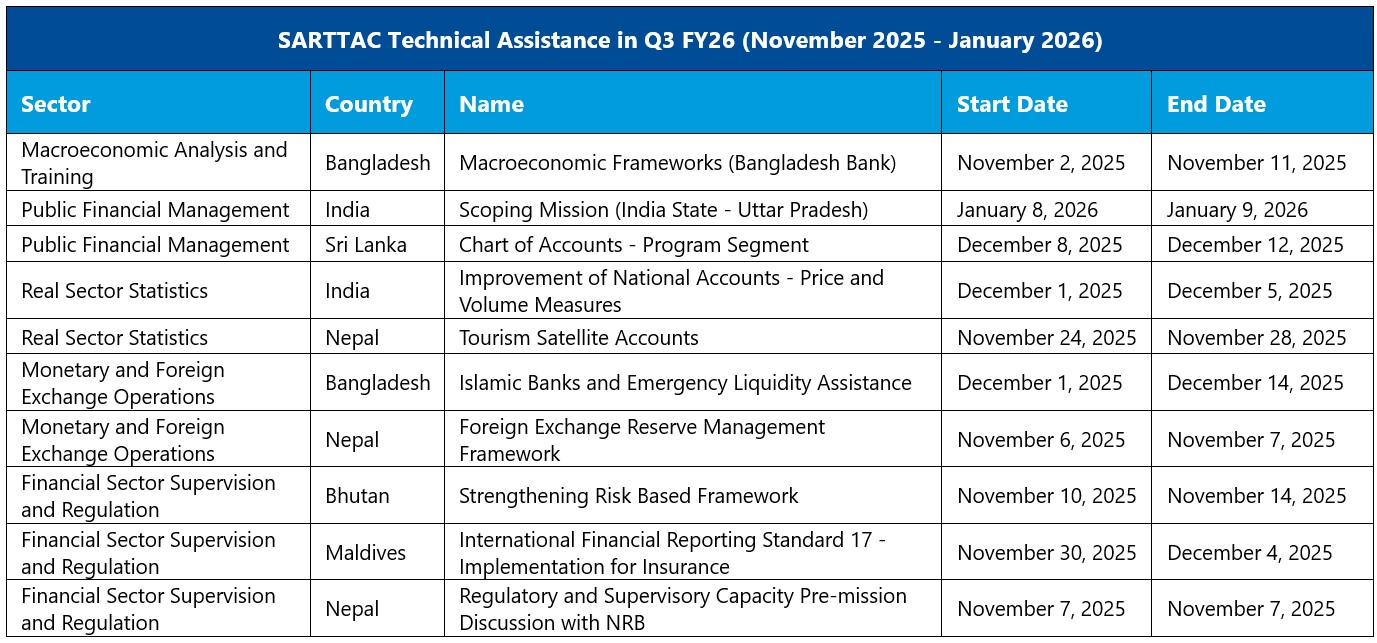
During the third quarter of FY26, SARTTAC delivered 11 TA missions across various workstreams in the region.:
- In Bhutan, a mission (November 10–14, 2025) reviewed progress made by the Royal Monetary Authority towards Risk Based Supervision (RBS) of banks and identifying associated challenges.
- In Bangladesh, SARTTAC conducted two TA missions. This included support to the Bangladesh Bank (BB) as part of its ongoing efforts to strengthen macroeconomic frameworks (November 2-12, 2025). It reviewed progress on macroeconomic forecasting and provided support to further develop medium‑term analytical tools for policy analysis. The second mission reviewed existing practices at the BB and provided recommendations on ongoing efforts to strengthen the framework for emergency liquidity assistance, including for Islamic banks, in line with international good practices (December 1-14, 2025). More details on this mission can be accessed here.
- In Nepal, SARTTAC conducted three TA missions. One mission supported the Nepal Rastra Bank (NRB) on foreign exchange (FX) reserve management, engaging with senior management and technical staff to discuss progress in implementing recommendations from an earlier mission and to review challenges in strengthening the FX reserve management framework (November 6–7, 2025). A second mission to the NRB held virtual pre‑mission discussions on regulatory and supervisory capacity development priorities, engaging with the authorities to identify key areas where further technical assistance could support enhancements in banking regulation and supervision (November 7, 2025). A final mission supported the National Statistics Office (NSO) of Nepal in developing a Tourism Satellite Account (TSA) in line with international statistical standards, providing hands‑on support and training on compiling TSA tables within the supply and use tables framework and discussing data requirements for measuring tourism demand and supply (November 24–28, 2025).
- In India, SARTTAC conducted a TA mission to support the Ministry of Statistics and Programme Implementation (MoSPI) on national accounts compilation (December 1–5, 2025). The mission discussed improvements to methods for estimating GDP at constant prices, including the use of appropriate deflators, and to review the use of Goods and Services Tax (GST) data to complement or potentially replace information from production surveys. A visit to the Indian state of Uttar Pradesh (January 8-9, 2026) discussed Public Financial Management priorities of the authorities.
- In Maldives, a mission (November 30 - December 4, 2025) assisted the Maldives Monetary Authority in strengthening insurance regulation and supervision and reviewed progress in RBS implementation.
- In Sri Lanka, SARTTAC conducted a mission to support the authorities in advancing public financial management reforms, with a focus on finalizing the program and project segments of the revised Chart of Accounts (CoA) (December 8–12, 2025). The mission engaged with the Department of State Accounts, the Budget Department, and line ministries to support the development of a coherent program classification framework and to review progress on other CoA segments. Another mission assisted the Public Debt Management Office in the development of institutional capacity for formulation of annual borrowing plan (December 8-17, 2026).

SARTTAC member countries participation in the IMF - Digital Horizons Forum to Advance Strategic Dialogue on PFM Digitalization in Asia
Senior fiscal and digital leaders from twelve South and Southeast Asian countries convened in Tokyo for the high‑level forum “Digital Horizons: Transforming Public Financial Management (PFM) for Tomorrow,”. The event (November 6-7, 2025) was organized by the IMF Fiscal Affairs Department (FAD) in collaboration with the IMF Regional Office for Asia and the Pacific (OAP), the IMF Capacity Development Office in Thailand (CDOT), and the IMF South Asia Regional Training and Technical Assistance Center (SARTTAC). The forum aimed to elevate discussions on PFM digitalization from technical implementation to strategic and institutional reform.
It focused on three interlinked themes: reframing digital transformation as institutional change, harnessing emerging technologies for measurable fiscal gains, and sustaining reform momentum. Keynote addresses were provided by Dr. Stefaan Verhulst (The GovLab) and Vice Minister Taiichiro Tomiyasu (Japan Digital Agency) who emphasized the need to move beyond digitizing existing processes and instead redesign PFM systems by embedding intelligence, interoperability, and trust into core institutional functions.
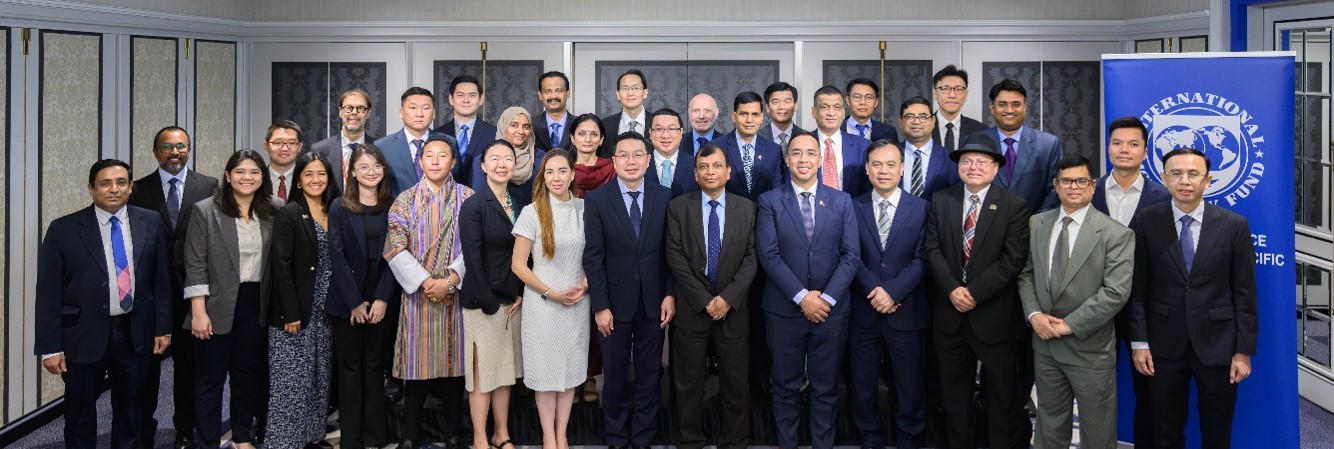 Digital Horizons: Transforming Public Financial Management
(November 6-7, 2025)
For SARTTAC member countries, the forum offered practical value through peer learning and the exchange of regional experiences on PFM digitalization. Country discussions highlighted shared challenges such as system fragmentation, coordination between finance and IT functions, and capacity constraints, while also showcasing approaches to strengthening data governance and aligning PFM reforms with broader national digital agendas.
The forum concluded with a forward‑looking dialogue on sustaining reform momentum and the future of digital PFM in Asia. Overall, the event reinforced SARTTAC’s CD objectives by helping member countries clarify strategic priorities and strengthen institutional foundations for effective and sustainable PFM digitalization.
A new tailored regional training on national accounts with focus on advanced compilation issues of the 2008 SNA and key topics in the update of the 2008 SNA (2025 SNA) was delivered (January 19-30, 2026). This provided participants with a comprehensive knowledge on the conceptual framework of the System of National Accounts 2008 (2008 SNA),) and the key changes in implementing the 2025 SNA. In addition to the standard lectures on the SNA framework, the course covered more advanced volume and price measures, supply and use and input-output tables, capital measurement, social security and insurance, intellectual property products, lectures on “Beyond GDP”, valuing household unpaid work, labor, education, and human capital accounts.
The main innovations of the 2025 SNA and their implications for compilation practices, data requirements, and institutional arrangements were discussed during the technical sessions. Interactive group discussions provided participants with an opportunity to articulate practical questions and share insights informed by their respective country experiences. These discussions helped to identify priority areas for further support, including the provision of targeted technical assistance to address country‑specific challenges.
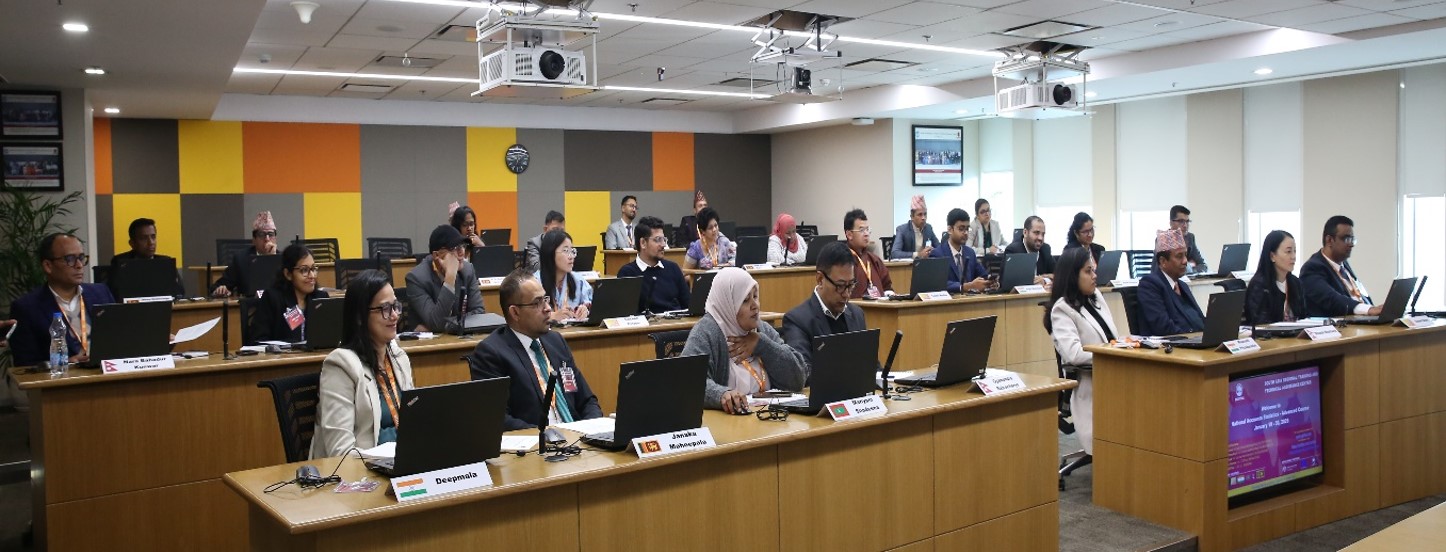 Training on National Accounts Advanced Compilation Issues (January 19-30, 2026)
At the request of the Bangladesh Bank (BB), a TA mission was conducted during December 1–14, 2025, to diagnose Islamic bank operations and support the establishment of an Emergency Liquidity Assistance (ELA) framework.
The mission assisted the authorities in the design and implementation of an Emergency Liquidity Assistance (ELA) framework to support financial stability. It evaluated Bangladesh Bank’s operational arrangements with Islamic banks, their interbank market activities, and liquidity buffers, highlighting sector‑specific vulnerabilities despite adequate system‑wide liquidity. The mission provided recommendations to Bangladesh Bank to modernize instruments for Islamic banks, integrate them into the monetary policy framework, and establish a comprehensive Emergency Liquidity Assistance (ELA) framework aligned with international best practices.
Additional TA missions are planned to review the draft public and internal ELA documentation and collateral frameworks, following broad engagement with relevant stakeholders.
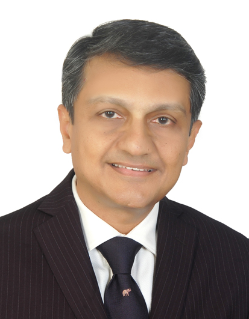 |
Ravinder Saroop completed a nearly three-year assignment as RA Resident Advisor in SARTTAC in December 2025. He has since moved to the IMF Regional Technical Assistance Center for Southern Africa. Below, Ravinder shares experience of his time in SARTTAC. |
What motivated you to join SARTTAC as the Revenue Administration (RA) Resident Advisor in March 2022, following a distinguished career of 30 years in revenue administration and tax policy with the Indian Revenue Service (IRS)?
Answer: My primary motivation was IMF’s global standing as an institution with enormous capacity to provide countries with impactful policy advice, technical assistance, and financial resources, to foster sustainable economic growth. I was impressed by IMF’s role as a trusted development partner for member countries, its extraordinary pool of professionals, and the humongous analytical material available in-house on a variety of tax and customs topics. Additionally, I thought the Resident Advisor position at SARTTAC would be the perfect vehicle to share my professional knowledge, particularly of international good practices in revenue administration, coupled with an insider experience of India’s tax and customs reform journey in recent years, with countries in the South Asia region to help accelerate their reform processes.
How would you describe the transition from an implementation-focused role in the IRS to a capacity-building role at SARTTAC?
Answer: The transition was not difficult as I already had considerable experience of providing capacity development (CD) support to countries in the South Asia region, as part of Government of India’s several bilateral and multilateral initiatives. Also, even when I was in the IRS, I was well-aware of the specifics of the role through my professional interactions with the then experts at SARTTAC.
What notable improvements or positive developments did you observe in revenue administration across the six member countries during your assignment?
Answer: With sustained IMF CD support, considerable progress has been made by the tax and customs administrations of member countries in their respective reform processes. Government of Nepal published a Domestic Revenue Mobilization Strategy (2024/25-2028/29) in September 2024 and began implementation of the same. In Bhutan, the Department of Revenue & Customs implemented its biggest tax reform so far- the Goods and Services Tax system. In Bangladesh, compliance risk management units were set up and compliance improvement plans were developed by the National Board of Revenue, in both VAT and income tax wings. Maldives published a Medium-Term Revenue Strategy (MTRS) 2024-2028 and began its implementation. In India, country plans were developed for improving collections and arrears management and strengthening risk-based audit, through training workshops. The Inland Revenue Department in Sri Lanka recorded significant improvement across compliance management areas, contributing to increased revenue mobilization and supporting economic recovery.
While you worked closely with all member countries, your engagement with the Maldives was particularly intensive. Could you highlight some of the key reforms or milestones achieved there?
Answer: The most significant was the development of the Maldives’ MTRS (2024-2028), published by Government of Maldives in June 2024, for which sustained FAD support was provided during FY 23 and 24. We also helped the Maldives Inland Revenue Authority (MIRA) to develop their Strategic Plan 2025-2028, and an Information Technology Strategic Plan, both aligned to the MTRS. Among other significant milestones for MIRA were improving audit outcomes in the banking sector, building a program for compliance management of high wealth individuals, strengthening internal audit, and also the development of a customs administration reform plan. It was a matter of great pride for us that during MIRA’s 15th anniversary, celebrated on August 9, 2025, IMF-SARTTAC was felicitated with a special mention and the “RanFanara” award, for sustained and impactful CD support.
There has been growing demand for customized national training programs in India. What is your perspective on this trend?
Answer: This is not surprising. There are emerging new areas of businesses and transactions across the world (e-commerce, online gaming, digital currency etc.) which are posing challenges for tax authorities, in addition to the existing ones (transfer pricing, profit shifting, to name a few). With rapid adoption of technology in recent years, India’s two Tax Boards have made impressive strides in IT-enablement of business processes and advanced data analytics, in both income tax and GST. There is keenness to ascertain and adopt global best practices in addressing the myriad emerging compliance challenges. I am confident that FAD will address this demand.
You led the cross-regional webinar series on digital transformation in revenue administrations for senior officials across the Asia-Pacific region, including participants from CCAMTAC and PFTAC, besides SARTTAC. How was this initiative received, and what value did it add?
Answer: The webinar series was conceived in response to CD requests on this topic from member countries’ revenue administrations, stemming from a growing realization that accelerated adoption of information technology tools and solutions will improve their efficiency and effectiveness. The webinar series is a collaborative effort with the IMF HQ GovTech team and colleagues from other RTACs. We designed it as a ten-part series, starting from the foundational concepts and moving to advanced topics. The series is being received very well, with about 100-150 officials from 18-20 countries in Asia-Pacific region participating in each webinar. The sessions are highly interactive and there is considerable knowledge-sharing through peer-to-peer learning. This will likely generate interest for technical assistance in digitalization/digital transformation.
Anything you especially miss most about living in India and working at SARTTAC? Do you have any concluding reflections for our readers?
Answer: As an Indian national, I was lucky to be selected for an IMF position in India. When I started, I did not face the challenges associated with moving to another country, which most experts in international organizations encounter. This helped me to hit the ground running. So yes, I will surely miss the comforts of living in my home country. I will also miss SARTTAC, particularly its highly professional administrative and support staff, who became a second family to me. I would be remiss in not acknowledging the huge support I received at SARTTAC from Director Giorgia and each staff member, which helped me to deliver impactful CD while enjoying my work. My concluding reflection is a quote from Confucius: “Choose a job you love, and you will never have to work a day in your life”
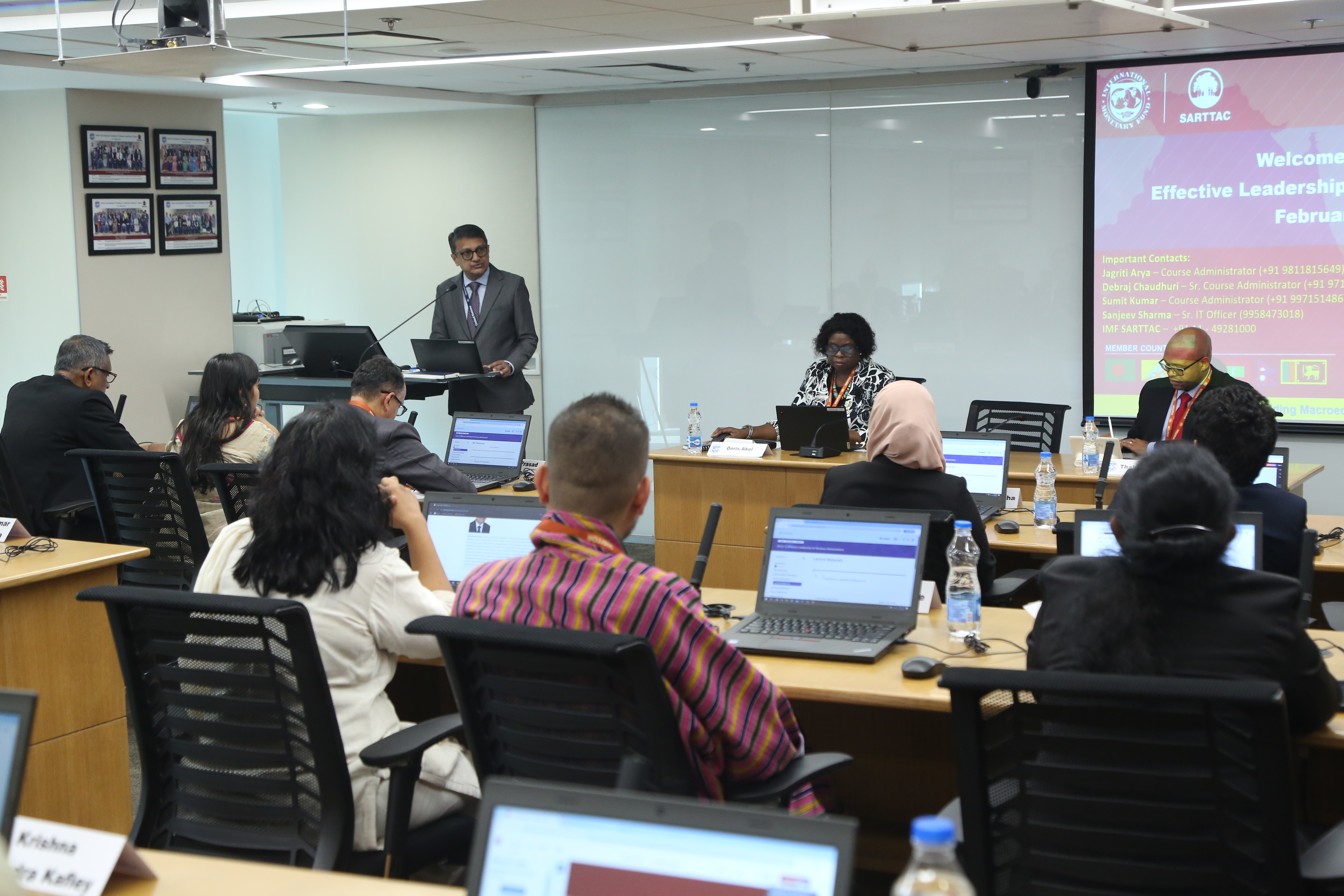 Ravinder during the training on Effective Leadership for Revenue Administration at SARTTAC


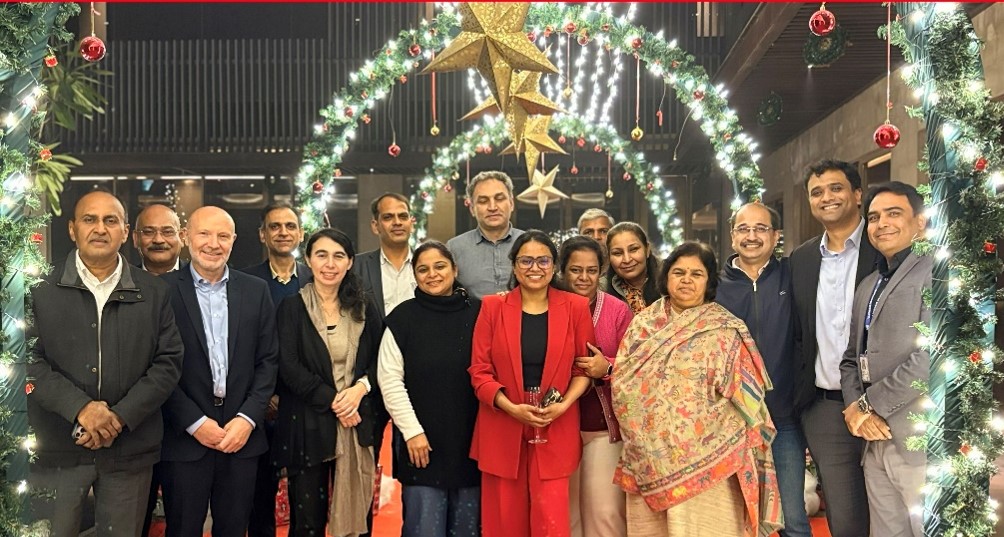 Year-end Christmas Celebrations at SARTTAC
More articles from the same issue
A Focus on Technical Assistance
- SARTTAC member countries participation in the IMF - Digital Horizons Forum to Advance Strategic Dialogue on PFM Digitalization in Asia
- Advanced National Accounts Training
- Bangladesh: Strengthening Islamic Bank (IB) Operations through a Diagnostic Review and Emergency Liquidity Assistance (ELA) Framework
- A conversation with Ravinder Saroop – Revenue Administration Resident Advisor in SARTTAC
- Summary of Operations in Q1-Q3 FY26
- Training and Webinars
- Technical Assistance
- Activities under the Public Debt Management Program funded by the Japan
- Technical Assistance Reports Disseminated on Partners Connect during FY26 Q3
- SARTTAC Website
- Staff Members
- Follow @IMFSARTTAC on Facebook
- Follow @IMF-SARTTAC on LinkedIn
- Follow @SARTTAC on X
Previous Issues <
