
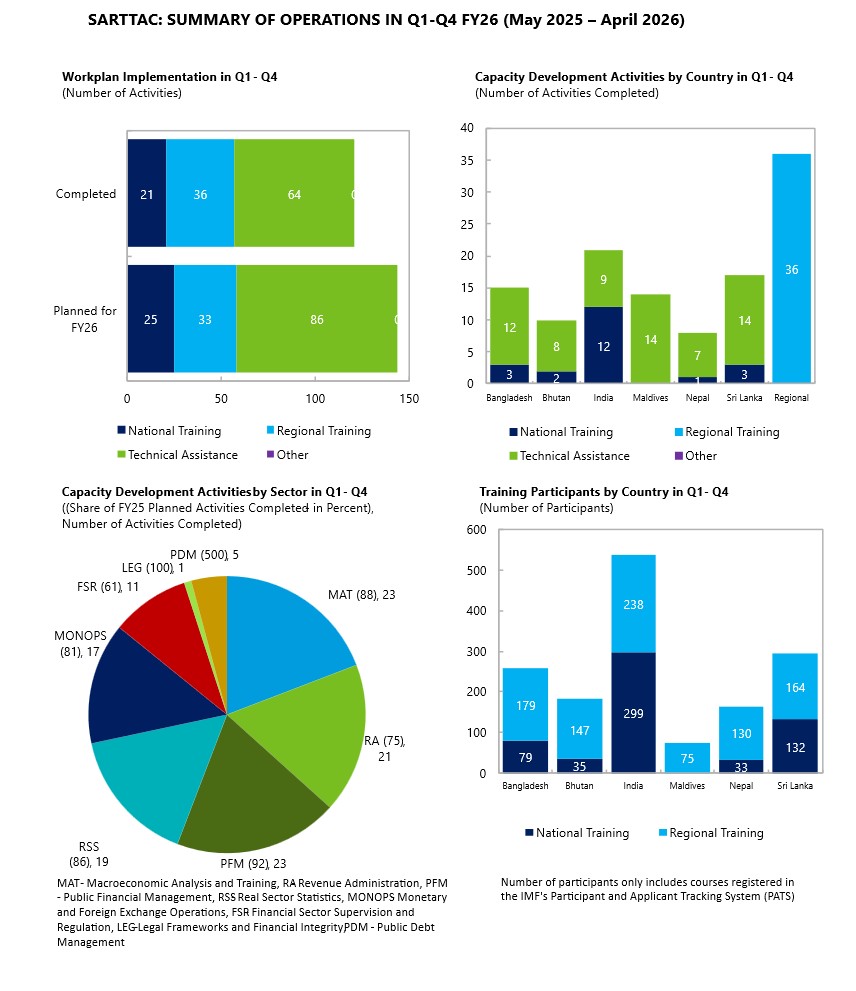
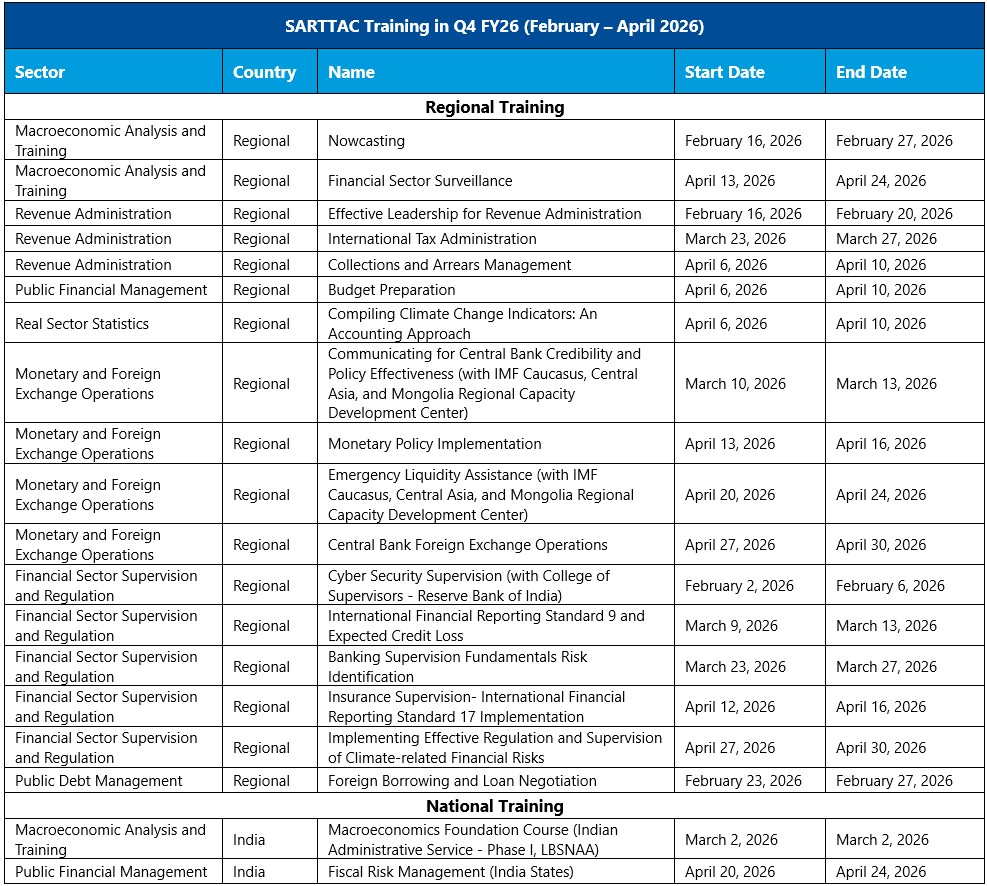
With the delivery of 20 regional and national training delivered both at SARTTAC and in-country, the fourth quarter (February – April 2026) was the busiest during the entire FY26. The quarter was also marked by progress in country-focused technical assistance (TA) and important internal milestones, highlighting SARTTAC’s ongoing support to member countries across diverse capacity development (CD) priorities.
Ms. Giorgia Albertin, Director, SARTTAC participated in a virtual meeting with the Asian Development Bank’s (ADB) South Asia Regional Department to discuss possibilities for collaboration in a way that could increase the CD/TA impact in the region.
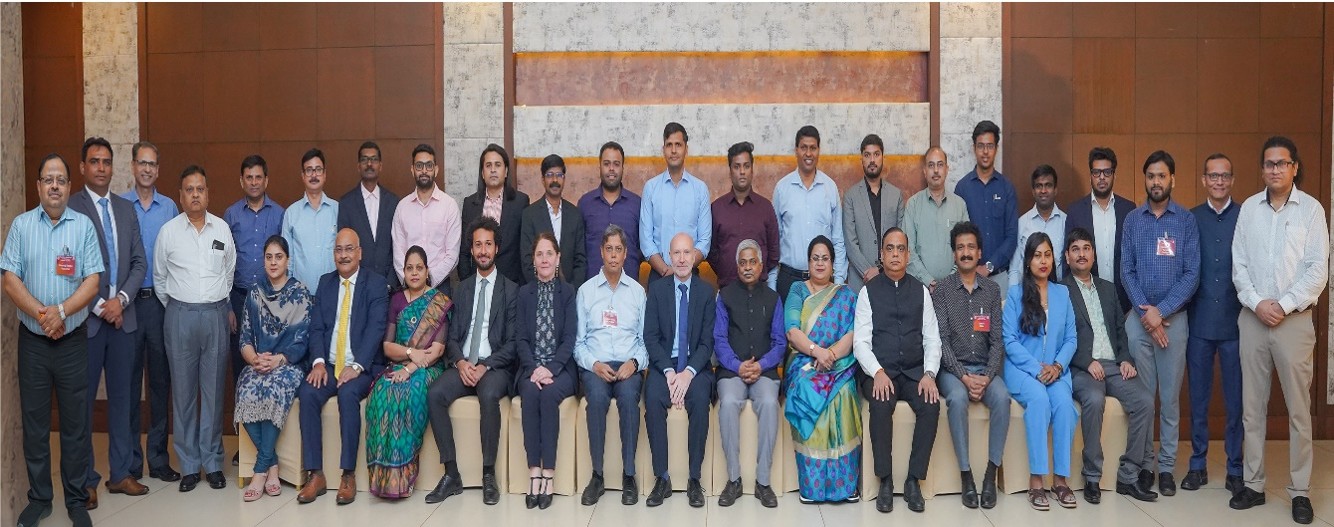
The quarter was marked by important internal milestones. On March 18, 2026, SARTTAC held its staff retreat, bringing colleagues together to reflect on lessons learned, strengthen teamwork, and explore ways to improve day-to-day collaboration. The retreat provided an opportunity for staff to step back from routine responsibilities, take stock of the center’s progress, and exchange views on how to enhance coordination and communication across functions. It also included team-building activities, discussions on workplace practices and priorities for the months ahead, and a dedicated session on the center’s upcoming office transition.
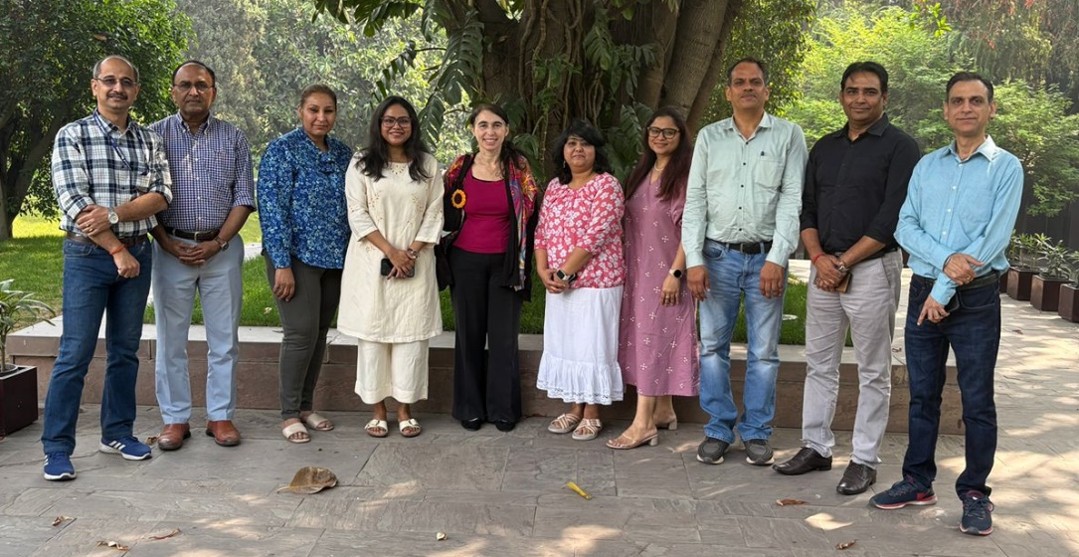 SARTTAC Staff Retreat, Roseate Hotel, Gurgaon
In April 2026, SARTTAC also advanced preparations for its temporary relocation to Atelier Suites in Worldmark 3, where the office will operate through early-2027 while its upcoming premises at Worldmark 5 are being finalized. Operations officially moved to Atelier Suites on April 20, 2026. The transition marks an important step in ensuring continuity of SARTTAC’s work during the interim period, with the new location providing a functional base for ongoing CD and administrative operations.
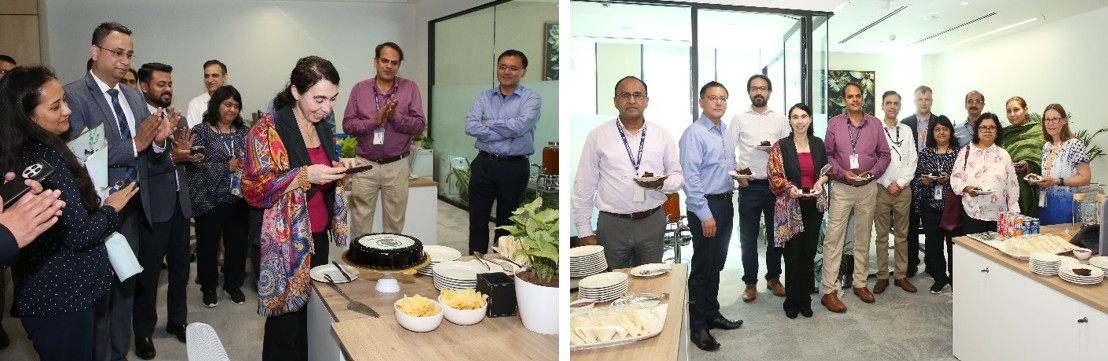 SARTTAC’s Temporary Move to Atelier Suites, Worldmark 3, Aerocity, New Delhi
At the request of Sri Lanka’s Department of Census and Statistics (DCS), a TA mission on the review of quarterly gross domestic product estimates was conducted (February 9–13, 2026). The mission supported DCS in reviewing its quarterly GDP (QGDP) methodology and provided customized training on QGDP compilation, with particular emphasis on strengthening the capacity of newer staff and enhancing institutional knowledge of quarterly national accounts compilation practices.
Another TA mission focused on Nepal’s foreign exchange reserve management framework took place during March 12–26, 2026. The mission reviewed investment policy and guidelines, governance arrangements, strategic asset allocation, reporting templates, and portfolio rebalancing under Nepal Rastra Bank’s foreign exchange reserve management framework.
The first technical assistance mission under the macroeconomic frameworks project in Bhutan was conducted in Thimphu during April 13–17, 2026. The mission aimed to bring together data from different sectoral files of the macroeconomic framework into a single main file. A mission (February 18-27, 2026) under a new TA project to develop a Financial Programming and Policies tool at the Central Bank of Sri Lanka was delivered. It worked with historical data to establish a framework across the real, external, fiscal, and monetary sectors, and helped prepare a consistent baseline. More details on the missions can be accessed here.
A scoping mission to Assam (April 9–10, 2026) identified priority public financial management support needs of the state. The mission identified fiscal risk management and strengthening the medium-term fiscal framework as immediate priorities and agreed on an indicative three-year program of technical assistance and training to support Assam’s World Bank disbursement-linked indicators.
The quarter also featured several regional training activities. In response to a request from SARTTAC member countries. a regional workshop on Foreign Borrowing and Loan Negotiation was conducted at SARTTAC during February 23–27, 2026. The workshop, which was also attended by officials from Lao PDR, provided a practical overview of the external loan lifecycle, covering financing choices, loan structuring, legal and financial clauses, currency and refinancing risk, guarantees, and negotiation mandates.
Several regional trainings during the quarter were delivered in collaboration with member country institutions and IMF Departments/Regional Capacity Development Centers. A regional course on Cyber Security Supervision, was held in collaboration with the Reserve Bank of India during February 2–6, 2026 at the College of Supervisors in Mumbai. The course covered cyber threat landscapes, regulatory and supervisory approaches, case studies, and country presentations. A training on Nowcasting delivered in collaboration with the IMF-Singapore Regional Training Institute (February 16–27, 2026), trained officials in advanced nowcasting methods using mixed-frequency data. It also included hands-on workshops with EViews and country applications using South Asian data. A joint SARTTAC-IMF Caucasus, Central Asia, and Mongolia Regional Capacity Development Center (CCAMTAC) regional workshop on Emergency Liquidity Assistance (ELA) was held in New Delhi (April 20–24, 2026). The workshop explored operational aspects of ELA and collateral frameworks, including eligibility, valuation, risk control measures, governance, transparency, haircut calculations, and a full simulation exercise. A regional course on International Tax Administration, delivered jointly by SARTTAC and IMF Fiscal Affairs Department (March 23–27, 2026), introduced participants from SARTTAC member countries to the IMF’s Framework for International Tax Administration Strengthening (FITAS). The course focused on compliance risks among large businesses and multinational enterprises, practical approaches to cross-border audits, and the use of self-assessment to help prioritize reforms.

During the third quarter of FY26, SARTTAC delivered a total of 19 training courses, largely centered on regional offerings (17 courses). Two national trainings complemented the regional program by addressing country specific CD needs.
SARTTAC’s regional offerings for the fourth quarter of FY26 was majorly centered around financial sector supervision, monetary and foreign exchange operations.
- Two first time trainings were delivered during the quarter. Experts from the IMF Statistical Department and the UN Statistical institute for Asia (UNSIAP) conducted a one-week course on Compiling Climate Change Indicators - An Accounting Approach, (April 6–10, 2026). The course was attended by officials from national statistics offices, central banks, ministries of finance, and ministries of Energy, Water Resources and Irrigation. It offered a detailed overview of measuring the effects of climate change using an accounting framework, especially system of environmental-economic accounting SEEA-based energy, air emissions, and asset accounts. A newly developed course on Foreign Borrowing and Loan Negotiation (February 23-27, 2026) was delivered. The course enhanced the capacity of government officials in managing external financing to support more effective debt management. The course honed participant’s practical skills to evaluate financing options, understand cost-risk implications, interpret key financial and legal provisions of loan agreements, and engage more effectively in negotiations with external lenders.
- Five training courses were conducted that covered various aspects of financial sector supervision and regulation. The first in this category was a course on Cyber Security Supervision (September 2-6, 2026), which provided training on cyber risk regulation and supervision to non-specialist financial sector supervisors. The course was well received with participants appreciating the comprehensive coverage of cyber risk supervision and the balance between theory and practical application. Training on International Financial Reporting Standard 9 and Expected Credit Loss (March 9-13, 2026) equipped bank supervisors with credit risk assessment skills and developed capacity for efficient asset quality review. A seminar on Banking Supervision: Fundamentals of Risk Identification and Supervisory Intervention (March 23-27, 2026) was held for supervisors of SARTTAC member countries. This course was specifically tailored to address the needs of junior and mid-level supervisors. The course introduced the conceptual framework underpinning banking supervision and sound supervisory judgment within a risk based supervisory framework. SARTTAC organized a five-day regional seminar on Insurance Supervision: IFRS17 Implementation (April 12–16, 2026) in Male, Maldives. The interactive workshop targeted middle to senior level insurance supervisors from SARTTAC member countries. This course equipped supervisory professionals with know-how on the IFRS-17 framework. This is especially relevant for several SARTTAC member countries that are in the process of adopting IFRS 17 for the insurance sector. Responding to the demand for training on climate related financial risks, SARTTAC conducted a course on Implementing Effective Regulation and Supervision of Climate-related Financial Risks (April 27-30, 2026) in Mumbai, India. The course offered guidance on establishing climate-related risk supervision. It covered issues which need to be factored by supervisors in developing their capacity for climate related risks supervision, as well as essential considerations for tailoring the supervisory process.
- SARTTAC conducted four training courses in the area of monetary and foreign exchange operations. The first course covered the topic of central bank communication. In continuation of collaboration with other IMF Regional Capacity Development Centers, a hybrid regional workshop in collaboration with CCAMTAC on Communication for Central Bank Credibility and Policy Effectiveness was held (March 10-13, 2026) in Almaty, Kazakhstan. The workshop was attended by 25 officials from 10 countries. Officials from both communication units and policy departments of central banks participated. They shared developments in communication practices in their countries and highly valued peer learning, country case discussions, and networking opportunities offered by the training. SARTTAC also collaborated with CCAMTAC to conduct a regional peer-to-peer workshop on Emergency Liquidity Assistance (ELA) (April 20-24, 2026). The workshop deepened participant’s understanding of key elements of ELA frameworks and explored the main challenges faced by central banks in developing economies in implementing ELA. A regional course on Monetary Policy Implementation (April 13-16, 2026) delivered in Thimphu, Bhutan. The course explored the challenges faced by central banks in emerging markets and developing economies in the effective implementation of monetary policy. Some of the key aspects covered by the course include monetary policy frameworks and implementation, the development of money markets and interest rate benchmarks, reserve requirements, the central bank collateral framework, and the communication and transparency of monetary operations. Finally, a Central Bank Foreign Exchange Operations (April 27-30, 2026) course was delivered. The curriculum encompassed a wide range of topics, delivered through lectures and discussion sessions, and was further enriched by selected country case studies (Sri Lanka, Bangladesh, and Moldova) and practical hands-on exercises, including conducting a price-based FX auction and preparing a press release on the auction results.
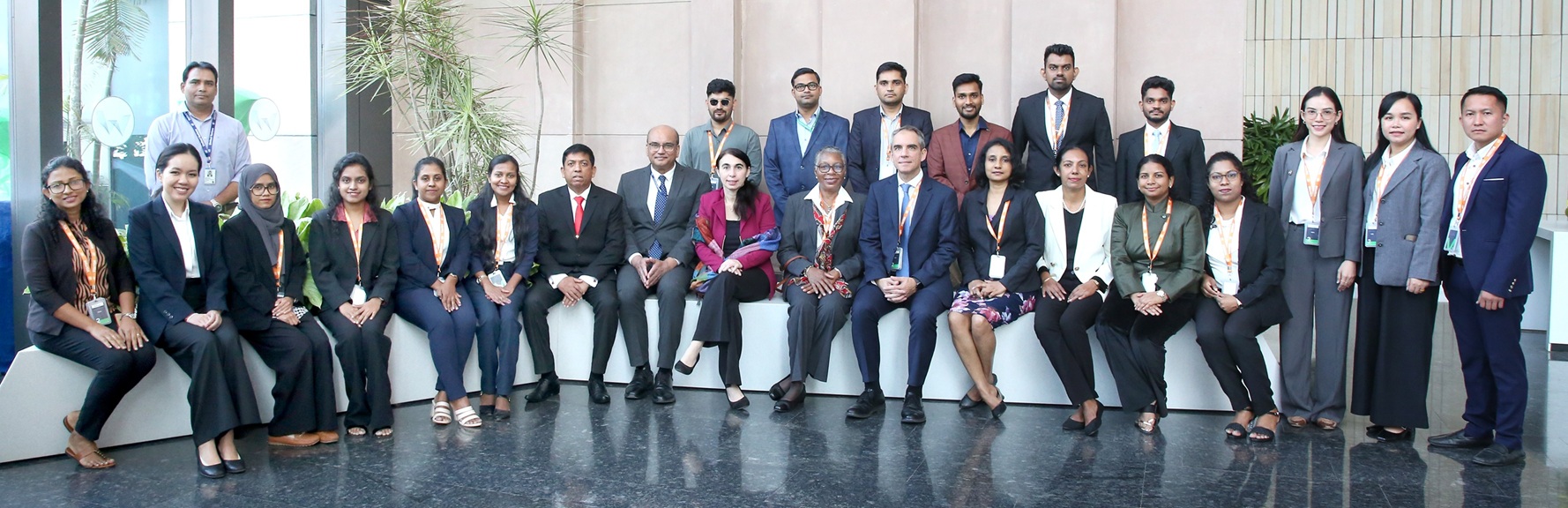 Foreign Borrowing and Loan Negotiation (February 23-27, 2026)
- Training on Effective Leadership for Revenue Administration (February 16-20, 2026) built capacity of revenue administrations to effectively address leadership challenges for achieving organizational objectives and implementing reform. The course utilized lecture sessions, case studies and role-play to encourage critical thinking capabilities for change management and exercising effective leadership.
- A blended training on International Tax Administration (March 23-27, 2026) consisted of a five-day in-person workshop at SARTTAC and four remote webinars between March and May 2026. This program strengthened the capacity of participants in core areas of international tax administration, with a focus on improving tax compliance among large businesses and multinational enterprises. A course on Collections and Arrears Management (April 6- April 10, 2026) provided participants with exposure to the key fundamentals of efficient and effective payment systems to minimize the occurrence of arrears and effective management of arrears collection.
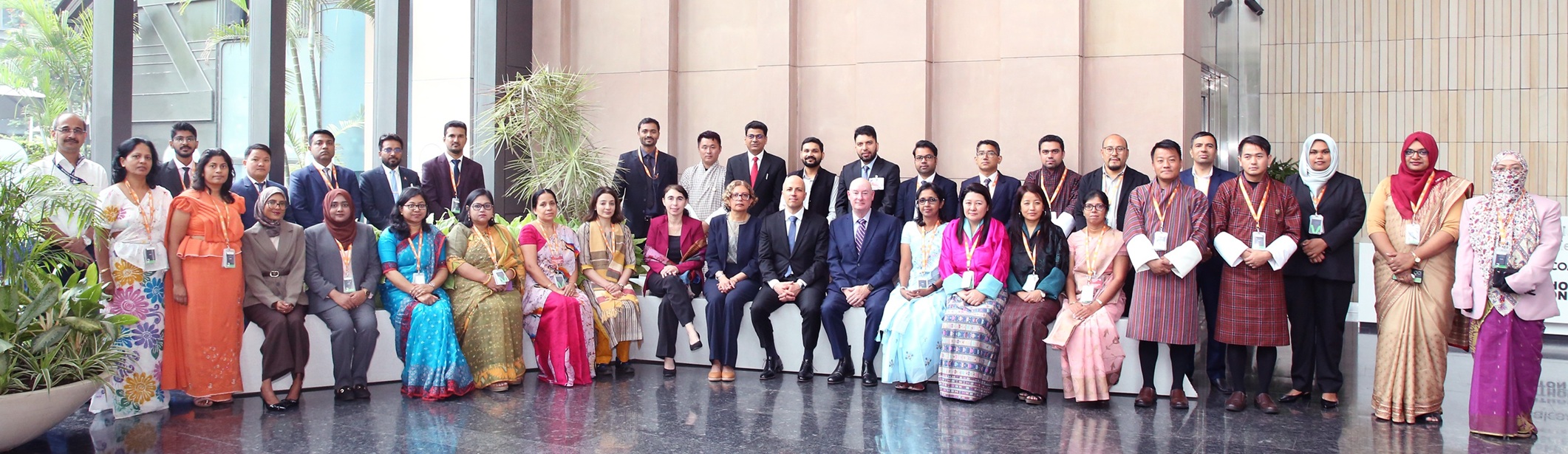 Strengthening International Tax Administration (March 23-27, 2026)
- The IMF Capacity Development Office Thailand (CDOT) and SARTTAC organized a joint regional workshop on Budget Preparation and Public Investment Management (April 6-10, 2026). Officials from in the Indian states of Rajasthan and Uttar Pradesh also participated in the training. The workshop equipped participants with strategic budgeting concepts such as strengthening the credibility of the annual budget process from the medium-term fiscal framework, developing budget baselines, integrating capital and recurrent budgets, new policy option costing techniques, performance informed budgeting practices and the evaluation of fiscal policy.
- Two regional trainings from the IMF Institute of Capacity Development (ICD) were offered – Nowcasting (February 16-27, 2026) and Financial Sector Surveillance (April 13-24, 2026). Nowcasting course offered technical training on identifying high frequency data, standardizing high frequency data using statistical procedures and utilizing various nowcasting techniques to provide forecasts for key macroeconomic variables. The Financial Sector Surveillance course introduced participants to key concepts and tools used in the identification and assessment of financial sector vulnerabilities and sources of strength. The course provided a basic toolkit to assess financial sector risks and measure them against existing capital and liquidity buffers in the financial system.
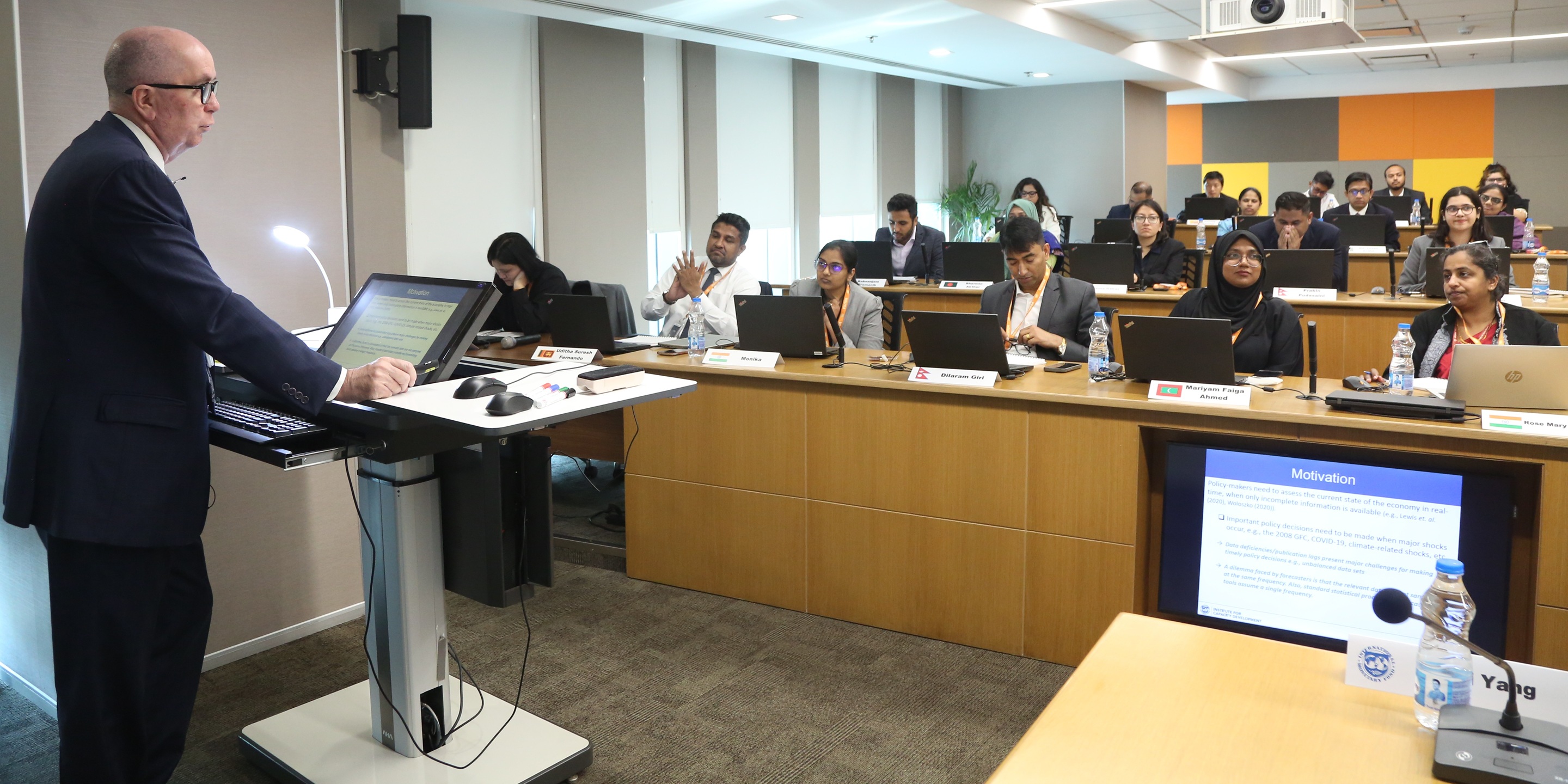 Nowcasting (February 16-27, 2026)
- Two national training courses were offered in the quarter to Indian officials. A Macroeconomic Foundation course module (March 2, 2026) was delivered to over 180 officer trainees of the Indian Administrative Services. The module offered probationary officers with a comprehensive understanding of India’s macroeconomic accounts and their inter-linkages; drivers of growth; public debt sustainability and the macroeconomic impact of external developments. A course on Fiscal Risk Management for Indian States (April 20-24, 2026) was delivered in Goa, India. The course identified key sources of fiscal risk facing governments and set out key mitigation actions and institutional arrangements that can be taken. See more details here.

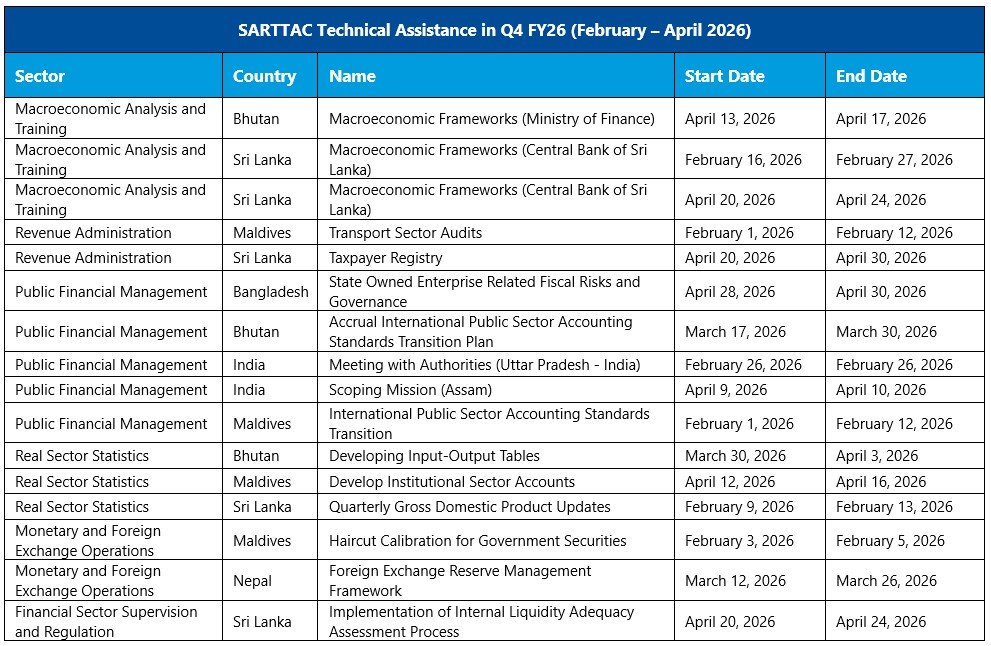
During the fourth quarter of FY26, SARTTAC delivered 17 TA missions across various workstreams in the region:
- Bangladesh: A mission (April 28–May 12, 2026) supported the Ministry of Finance in strengthening the monitoring and management of fiscal risks arising from state-owned enterprises (SOEs). The mission built on earlier engagements by supporting the use of analytical tools, enhancing institutional capacity, and reviewing governance and oversight frameworks, helping the authorities consolidate recent reforms and identify areas for further improvement in SOE performance monitoring and fiscal risk management.
- Bhutan: During the quarter, SARTTAC conducted three technical assistance missions in Bhutan. A mission to the Ministry of Finance (March 17–30, 2026) supported its transition toward accrual-based international public sector accounting standards (IPSAS) through a gap analysis and the development of a phased roadmap, strengthening fiscal reporting frameworks and supporting longer-term public financial management reforms. The second mission (March 30–April 3, 2026) supported the National Statistics Bureau in improving input–output tables and initiating the development of institutional sector accounts, laying the groundwork for more comprehensive and consistent national accounts and evidence-based policymaking. Furthermore, a mission to the Ministry of Finance (April 13–17, 2026) focused on strengthening the macroeconomic framework used by Bhutan Macroeconomic Framework Coordination Committee by consolidating sectoral data into a unified system, improving the consistency of forecasts, and enhancing capacity for medium-term macroeconomic projections and policy analysis.
- India: SARTTAC continued its engagement with Indian states to support public financial management reforms. Building on a scoping mission to Uttar Pradesh in January 2026, which identified reform priorities across key areas such as strategic budgeting, fiscal risk management, public investment management, and cash and debt management, a follow-up interaction with the authorities (February 26, 2026) supported the development of a medium-term reform agenda and explored modalities for continued engagement. In addition, a scoping mission to Assam (April 9–10, 2026) identified priority capacity development needs, with an initial focus on fiscal risk management and strengthening the medium-term fiscal framework. The mission agreed on a sequenced program of technical assistance and training, upporting ongoing reform efforts at the subnational level.
- Maldives: Engagement with Maldives was scaled up during the quarter, with five TA missions delivered across public financial management, revenue administration, monetary operations, real sector statistics, and public debt management workstreams. A mission (February 1–12, 2026) supported the Ministry of Finance in advancing its transition toward accrual-based international public sector accounting standards (IPSAS), including reviewing accounting frameworks and strengthening reporting practices. The engagement also assessed implementation readiness and outlined practical next steps to sustain progress toward enhanced fiscal transparency. Another mission (February 1–12, 2026) supported the Maldives Inland Revenue Authority in strengthening audit capacity in the transport sector, including through targeted training, development of analytical tools, and enhanced approaches to compliance risk management. A virtual mission (February 3–9, 2026) supported the Maldives Monetary Authority in developing a framework for calibrating haircuts on government securities, contributing to strengthened risk management practices for monetary operations and collateral frameworks. Furthermore, a mission (April 12–16, 2026) supported the Maldives Bureau of Statistics in advancing the compilation of annual institutional sector accounts, including improving data coverage, strengthening sectoral accounts, and enhancing consistency across macroeconomic statistics. Finally, a mission on public debt management (April 19–26, 2026) provided hands-on support to strengthen capacity for the formulation of a medium-term debt management strategy, including practical training and application of analytical tools to support policy development.
- Nepal: A hybrid mission (March 12–13, 2026 (virtual) and March 16–26, 2026 (in-person)) supported the Nepal Rastra Bank in strengthening its foreign exchange reserve management framework. The mission reviewed progress since earlier engagements and provided guidance on improving governance arrangements, risk management practices, and strategic asset allocation. It also supported the authorities in enhancing the overall reserve management framework, with a focus on aligning policies and operations with international best practices.
- Sri Lanka: Engagement with Sri Lanka during the quarter comprised five missions, including two that supported the Central Bank of Sri Lanka in strengthening its forecasting and policy analysis capacity. The first mission (February 18–27, 2026) focused on establishing a macroeconomic accounting framework, preparing baseline projections across key sectors, and initiating the development of a financial programming and policy toolkit. The follow-up mission (April 20–24, 2026) advanced this work by refining projections, incorporating the monetary sector, and finalizing a consistent baseline macroeconomic framework to support policy analysis. Another mission (February 9–13, 2026) supported the Department of Census and Statistics in strengthening quarterly GDP compilation through methodological improvements and targeted training to enhance data quality and consistency. Furthermore, a mission (April 20–30, 2026) supported the Inland Revenue Department in strengthening the taxpayer registry, including through the development of governance frameworks, analytical processes, and sustainable data management practices to improve compliance and administrative efficiency. Finally, a mission on financial sector supervision (April 20–24, 2026) supported ongoing efforts to strengthen supervisory frameworks, including work related to liquidity risk management and supervisory processes.

With STI on Macroeconomic Analysis and Training
A Nowcasting regional training (February 2-13, 2026) was delivered in collaboration with the IMF Singapore Training Institute. In additional to topics presented in the previous deliveries of the Nowcasting course, new lectures and workshops on non-linear machine learning methods were introduced. Additionally, case study on the IMF’s Africa Department’s own experience in nowcasting GDP was shared with the participants. The training delivery was led by Mr. Paul Cashin, Director IMF STI.
With CCAMTAC for Central Banks
SARTTAC continued their engagement with member countries through two joint regional workshops with CCAMTAC in FY26: “Communication for Central Bank Credibility and Policy Effectiveness,” held in Almaty, Kazakhstan, on March 10–13, 2026, with 25 officials from central bank communication units and policy departments across six CCAMTAC and five SARTTAC countries; and Emergency Liquidity Assistance (ELA), held in New Delhi, India, on April 20–24, 2026, with 30 officials from 12 member countries across both regions, representing market operations, supervision, financial stability, and risk management departments, as well as Bangladesh’s Ministry of Finance.
As next steps, SARTTAC and CCAMTAC plan two regional peer-to-peer workshops in FY27: Central Bank Balance Sheet and Policy Solvency in Delhi, India, on August 31–September 3, 2026; and Foreign Exchange Reserve Management in Almaty, Kazakhstan, on November 23–27, 2026.
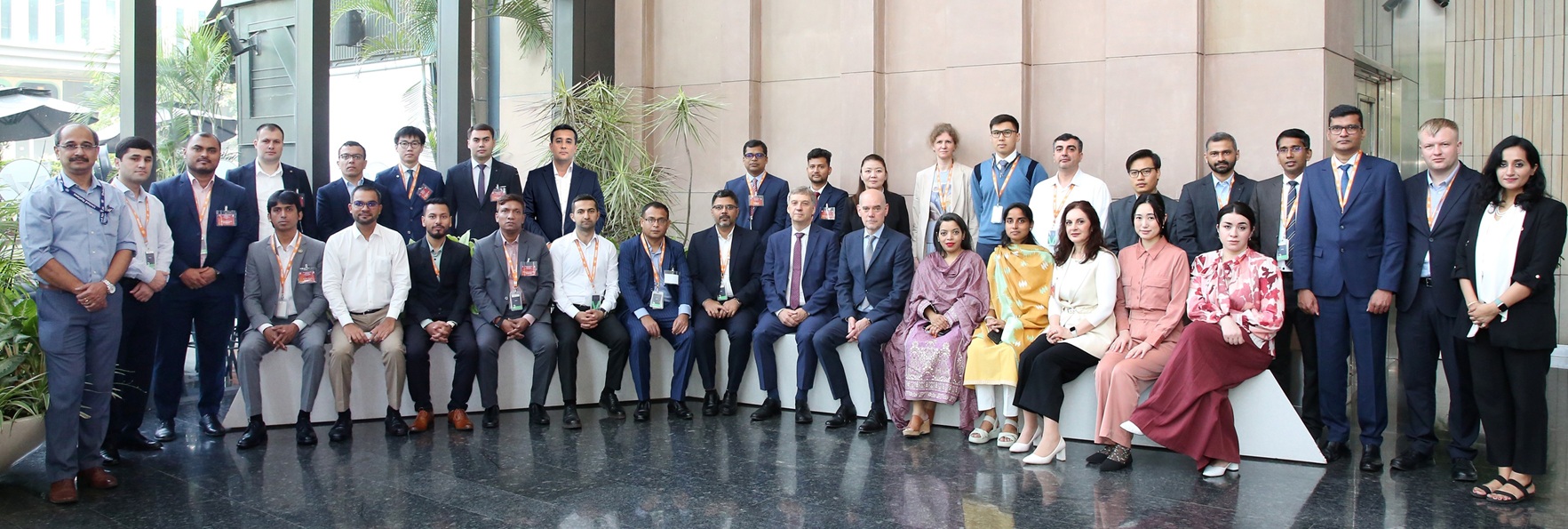 Emergency Liquidity Assistance (April 20–24, 2026)
With CDOT on Budget Preparation
SARTTAC, in collaboration with the IMF’s Capacity Development Office in Thailand (CDOT), successfully delivered a dynamic regional Budget Preparation workshop in Colombo (April 6–10, 2026), bringing together 70 officials from 12 South and South-eastern countries. The five-day course opened with remarks from the Sri Lankan Treasury Secretary and combined practical exercises with peer exchange, giving participants hands-on experience in strengthening medium-term fiscal frameworks, improving budget credibility, and advancing performance-informed budgeting. Discussions showcased emerging reform momentum across countries, while also tackling shared challenges. The highly interactive format and strong engagement underscored the power of regional collaboration in driving more strategic and effective public financial management.
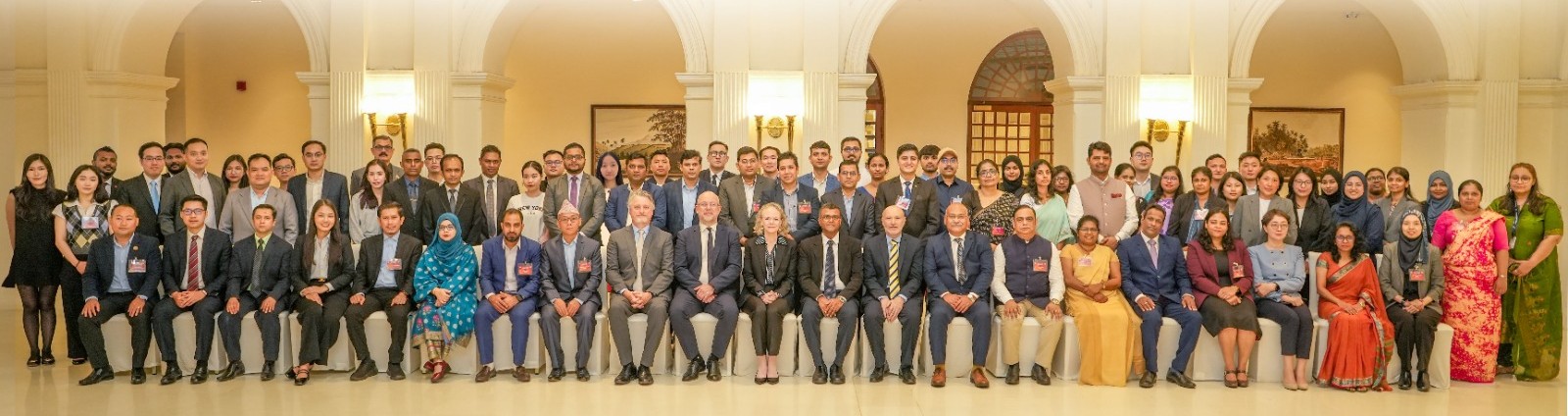 Budget Preparation workshop in Colombo (April 6–10, 2026)
In Q4, SARTTAC supported important technical assistance missions to advance accrual-based International Public Sector Accounting Standards (IPSAS) reforms in Maldives and Bhutan. These missions reflect strong collaboration with national authorities and continued momentum in strengthening fiscal transparency and public financial management systems across the region.
The Maldives mission, conducted in February 2026, supported the authorities in advancing their transition to accrual-based accounting. The engagement focused on strengthening key components of the accounting framework, improving financial reporting practices, and supporting alignment with international standards. It also contributed to ongoing efforts to modernize systems and frameworks that underpin government financial reporting.
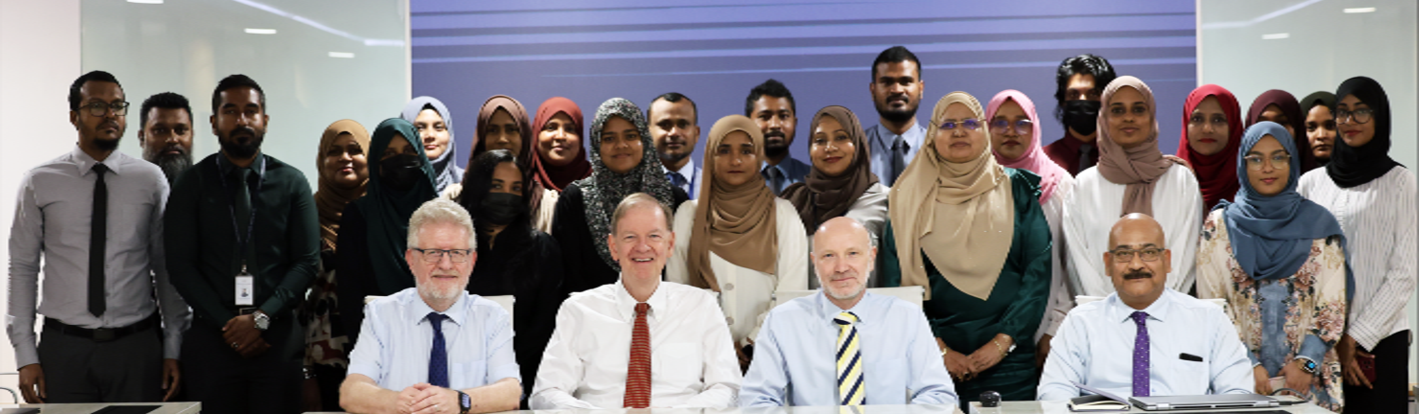 TA Mission in Maldives (February 2026)
In Bhutan, the March 2026 mission provided a comprehensive assessment of readiness for accrual IPSAS implementation and supported the development of a structured medium-term reform roadmap. Building on the country’s strong existing practices in financial reporting, the mission helped define a phased approach to accrual transition and to further strengthen and modernize the reporting framework over time.
Across both countries, the missions emphasized coordinated reforms across institutions, systems, and frameworks, alongside strengthening technical capacity within finance ministries. The engagements also fostered closer collaboration across government stakeholders involved in financial reporting and public financial management.
These IPSAS missions highlight SARTTAC’s integrated approach to capacity development combining technical assistance with practical implementation support and reinforce its role as a trusted partner in helping member countries modernize public sector accounting systems. By supporting the transition to accrual-based reporting, SARTTAC is contributing to enhanced fiscal transparency, stronger accountability, and more informed policymaking across the region.
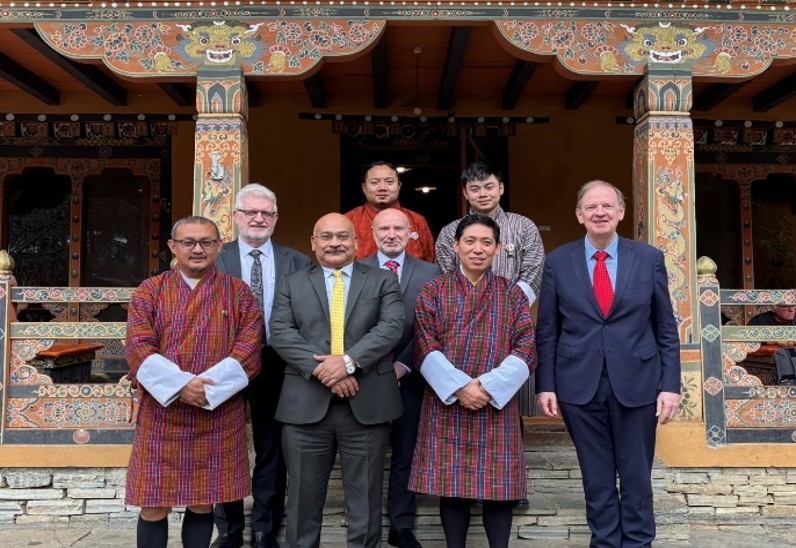 TA Mission in Bhutan (March 2026)
SARTTAC delivered two regional courses related to climate change in this quarter in different workstreams:
Measuring Climate Change using an Accounting Framework
SARTTAC, in collaboration with the IMF Statistics Department (STA) and the United Nations Statistical Institute for Asia and the Pacific (UNSIAP), delivered a regional course on Climate Change Indicators: An Accounting Approach for the first time (April 6-10, 2026). The course enhanced participants’ understanding of the System of Environmental-Economic Accounting (SEEA), the international statistical framework that provides concepts, definitions, and methodologies to measure the relationship between climate change and economic activity. Key topics covered included climate risk concepts and definitions, energy balances and energy accounts, air emissions accounts, asset accounts, and good practices in data dissemination. It brought together officials from national statistics offices, central banks, ministries of finance, and ministries of energy, water resources and Irrigation from SARTTAC member countries and promoted peer learning and regional knowledge exchange.
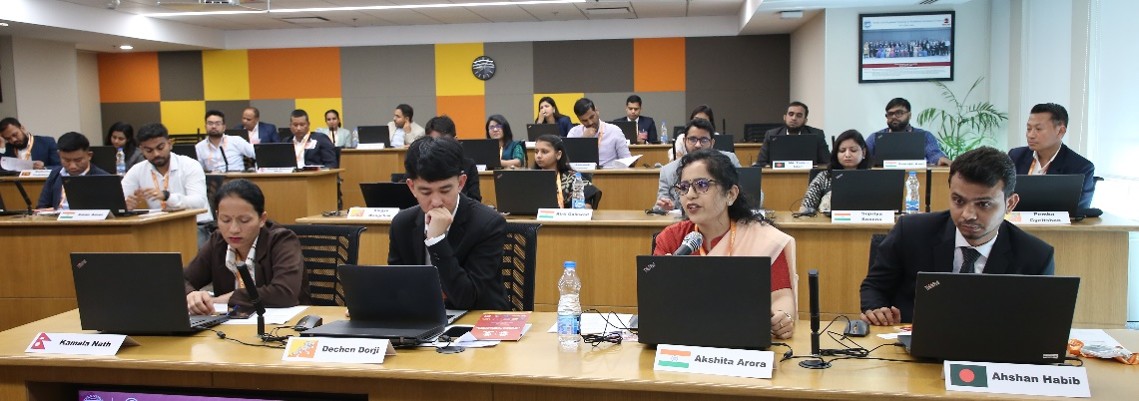 Participants engaged in interactive learning during the training onClimate Change Indicators: An Accounting Approach (April 6-10, 2026)
Equipping Supervisors to Implement Climate-Related Financial Risk Supervision
SARTTAC in collaboration with College of Supervisors (RBI) delivered a four-day regional course in Mumbai (April 27–30, 2026) that gave bank supervisors a practical roadmap for implementing climate-related financial risk supervision, anchored in the 2024 Basel Core Principles and the 2022 Basel Committee on Bank Supervision (BCBS) climate principles. The course advanced the following supervisory objectives: strengthening the prudential foundations, integrating climate risks into the supervisory review process, and extending supervision to climate risk market disclosures.
First, the course built the prudential foundations for climate-risk supervision. Lectures clarified the supervisory mandate, scope, and topical focus (climate risk supervision versus green finance and transition planning), introduced the BCBS Principles 1-18 covering both bank management and supervisory expectations, and examined the choice between binding requirements and supervisory guidance for incorporating climate risks into Pillar 1 and Pillar 2.
Second, the course approaches to operationalize climate risks within the supervisory review process. Drawing on the Banco Central do Brazil's practice, sessions demonstrated how to embed climate considerations into business model analysis, corporate governance, risk management, and information architecture.
Third, the course discussed extended supervisory approach to markets disclosures and combined prudential and conduct perspectives. Sessions covered International Organization of Securities Commissions (IOSCO) frameworks for sustainable finance products, issuer disclosure regimes and their supervisory use, tools to detect and enforce against greenwashing, and the Indian regulatory approach to green products presented by Securities and Exchange Board of India (SEBI).
Through interactive group exercises, the seminar prepared supervisors carry the work forward after the course. Participants began considering implementation roadmaps and specific practical steps to strengthen climate risk related supervisory practices across SARTTAC member countries.
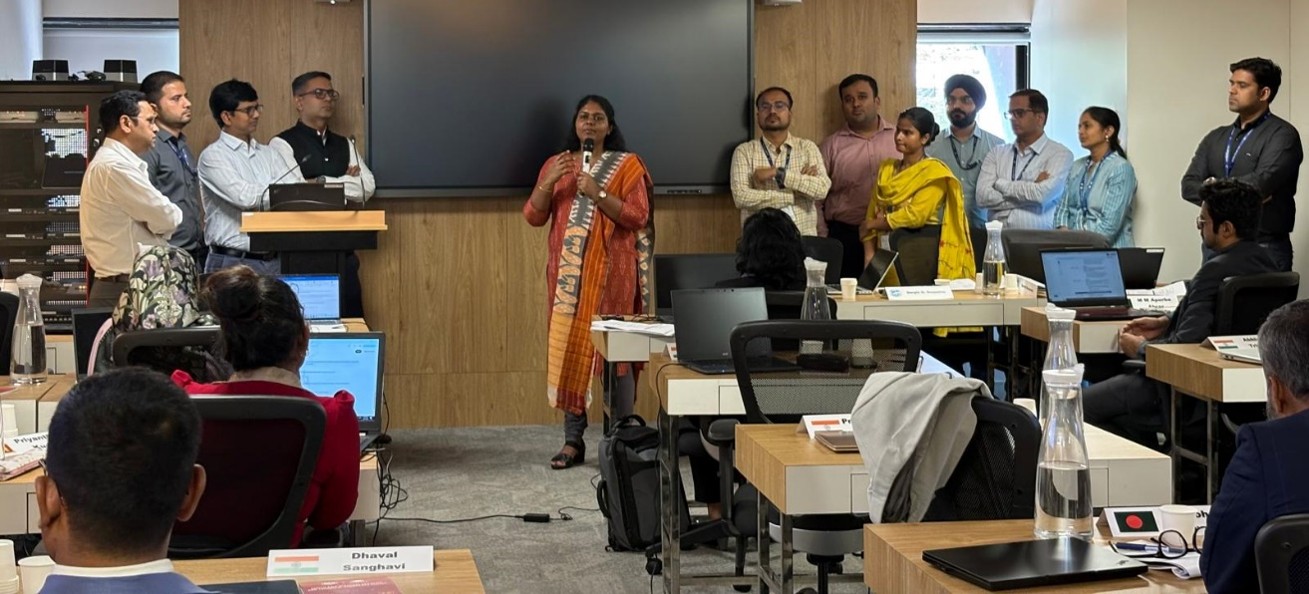 Participants sharing the implementation strategies based on the regional training on Implementing Effective Regulation and Supervision of Climate-related Financial Risks
(April 27-30, 2026)
In April 2026, SARTTAC delivered a five-day Fiscal Risk Management training workshop in Goa, bringing together 29 mid- to senior-level officials from eight Indian States and the Ministry of Finance. The workshop responded to growing demand from States to strengthen their capacity to identify, assess, and manage fiscal risks in an increasingly complex fiscal environment.
The training covered key sources of fiscal risk including macroeconomic shocks, government guarantees, public sector undertakings, public-private partnerships, and natural disasters while introducing international good practices and IMF analytical tools.
A strong emphasis was placed on practical application. Participants engaged in hands-on exercises to develop fiscal risk registers and discuss mitigation strategies, supported by peer learning and experience-sharing across States. A dedicated session showcased Odisha’s progress in fiscal risk management, while discussions with the Reserve Bank of India provided insights into emerging fiscal challenges facing States.
The workshop was highly interactive and well received, with participants highlighting its practical relevance and immediate applicability. By combining analytical tools with peer exchange, the training strengthened the foundation for more systematic fiscal risk management practices, supporting improved fiscal transparency, resilience, and decision-making at the state level.
 Fiscal Risk Management Training (April 20-24, 2026)
During the fourth quarter, three missions supported development of macroeconomic frameworks in Bhutan and Sri Lanka. These are the first SARTTAC led TA projects under the Macroeconomic Analysis and Training workstream with majority of the delivery done by SARTTAC staff.
Following a scoping mission in September 2025, a mission (April 13-17, 2026) assisted Bhutan’s Macroeconomic Framework Coordination Committee and its Technical Committee in strengthening macroeconomic policy making by building a consistent macroeconomic framework. The mission made significant progress towards this goal by bringing together data from the real and fiscal sectors and finalizing projection methods for the same. The discussions also focused on incorporating high-frequency indicators in the analysis of the economy, especially in the current environment of high uncertainty. The next mission of the project is schedules in the first half of FY27 before which SARTTAC will provide support virtually.
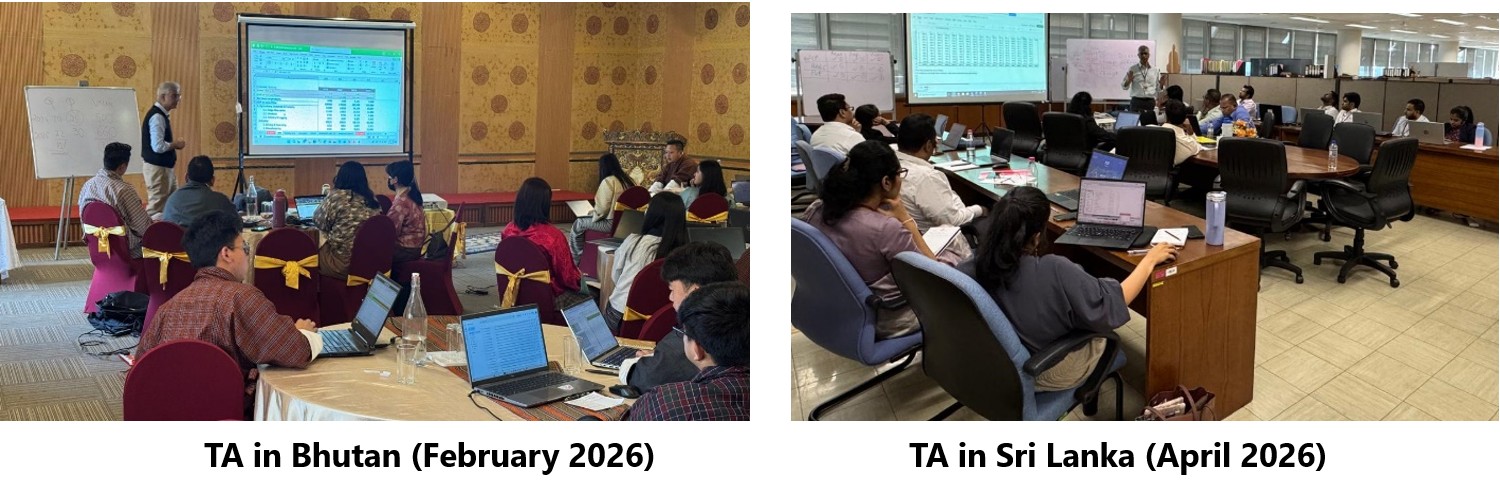
SARTTAC delivered two macroeconomic frameworks TA missions (February 16-27, 2026 and April 20-24, 2026) to the Central Bank of Sri Lanka (CBSL) during the quarter. At the end of the second mission, the CBSL team had built a baseline macroeconomic framework with five year projections. The framework also incorporated the impact of recent global economic developments, including the war in the Middle-East. The missions benefitted by the participation of officials from the Department of Census and Statistics (DCS) who shared their knowledge on compilation and sources for Sri Lankan Price and GDP statistics.
To ensure the continuity and knowledge transfer in light of future personnel changes, a user manual is being drafted by officials in both countries.



More articles from the same issue
A Focus on Technical Assistance
- Collaboration with other RCDCs
- Advancing Public Sector Accounting Reforms: IPSAS Missions in Maldives and Bhutan
- Regional Training on Climate Change
- Strengthening Fiscal Risk Management in Indian States: Sub-National Training in Goa
- Macroeconomic Framework Technical Assistance in Bhutan and Sri Lanka
- Summary of Operations in FY26 Q1 - Q4
- Training and Webinars
- Technical Assistance
- Activities under the Public Debt Management Program funded by the Japan
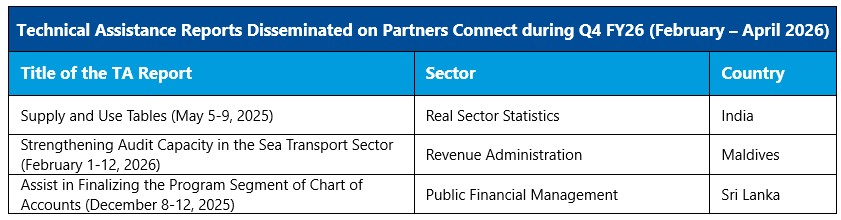
- Technical Assistance Reports Disseminated on Partners Connect during FY26 Q4
- SARTTAC Website
- Staff Members
- Follow @IMF-SARTTAC on LinkedIn
- Follow @IMFSARTTAC on Facebook
- Follow @SARTTAC on X
Previous Issues <
