
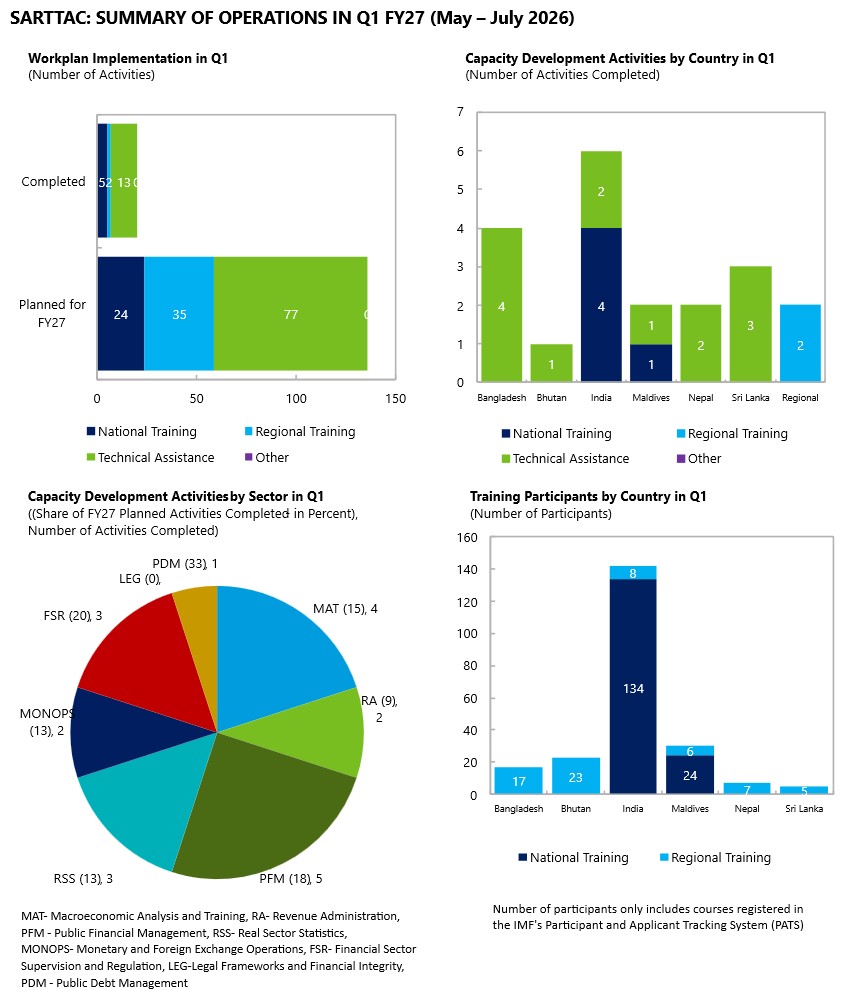
In May–July 2026, the first quarter of FY27, SARTTAC worked with member countries to strengthen institutions, improve policies, and build technical capacity across a range of economic sectors. Through 15 Technical Assistance (TA) missions and 9 training events, we helped strengthen the institutions and skills that underpin sound economic management and contribute to macroeconomic stability, resilience, investment, growth, and rising living standards. We also welcomed Alison Lister, who joined SARTTAC as Revenue Administration Advisor in June.
SARTTAC also welcomed IMF leadership during the quarter. On May 20, 2026, Sanjaya Panth, Deputy Director of the IMF’s Asia and Pacific Department, visited SARTTAC’s Aerocity office together with incoming Director Harald Finger. Their discussions with staff covered the center’s work and future priorities and offered an opportunity for Mr. Finger to meet the team ahead of taking up his new role in August.
SARTTAC and the IMF Statistics Department hosted a regional workshop on improving statistics on digital money under the G20 Data Gaps Initiative (DGI) (June 2-4, 2026). Better data on digital money is increasingly important for monitoring financial developments and risks and supporting well-informed policy decisions. The workshop brought together members from G20, Financial Stability Board (FSB) non‑G20 economies, Bank for International Settlements, European Central Bank, and FSB. Workshop discussions were rich and forward-looking, focusing on pilot data collection results and how to build on them. Participants shared practical insights on regulatory reporting, alternative data sources, and innovative approaches to improve data coverage and cross‑country comparability.
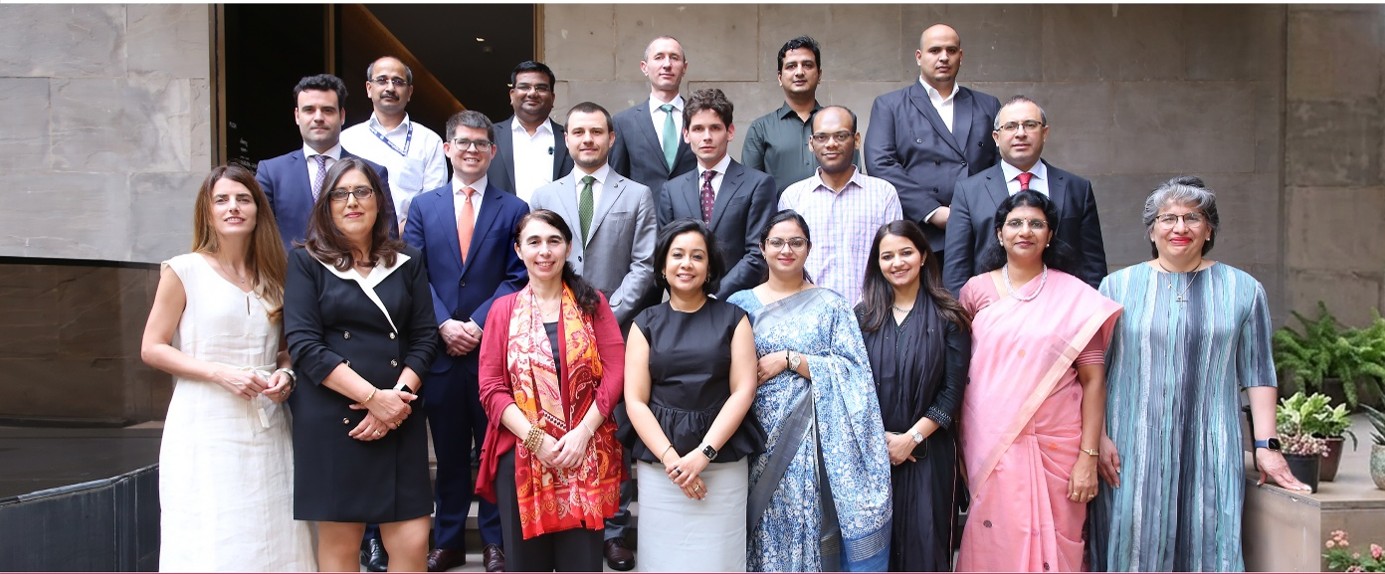
Regional workshop on Recommendation 11 on Digital Money of the G20 Data Gaps Initiative (DGI) (June 2-4, 2026)
In June, the IMF and World Bank jointly trained officials on Local Currency Bond Markets (June 8-12, 2026) under the Japan-supported Public Debt Management workstream. The training helped to build participants’ skills in debt management strategies, monetary policy frameworks, and financial sector policies that support the development of local currency bond markets, with the aim of deepening domestic capital markets and strengthening financial resilience.
Our webinar series on digital transformation of revenue administrations continued with an event on issues around legacy IT systems. Modernizing legacy systems can help revenue administrations deliver more efficient taxpayer services, make better use of data, and adapt more readily to changing needs and technologies. The July 29 webinar on Addressing Challenges in Legacy System Integration covered phased transformation, integrated taxpayer services, and international best practices. The online format enabled broad regional participation and provided a flexible platform for sharing experiences and expertise across countries.
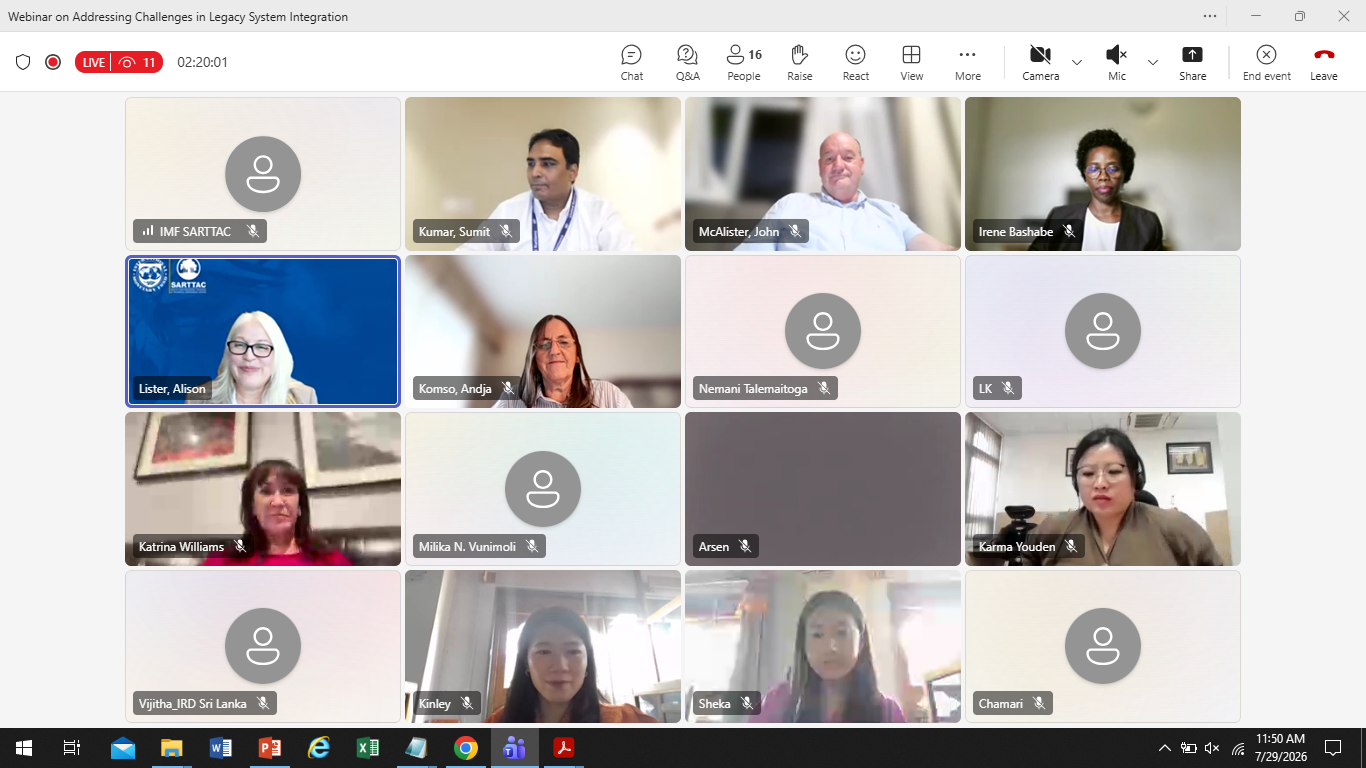
Regional Webinar Addressing Challenges in Legacy System Integration
(July 29, 2026)
SARTTAC training engagement with India continued to broaden. For example, as part of our new engagement with the State of Uttar Pradesh, we held a customized training focused on Medium-Term Fiscal Frameworks (July 7-17). The training was part of our agenda aimed at enabling enhanced fiscal discipline, transparency, and resilience in the State. Additionally, we widened participation in SARTTAC’s annual Macroeconomic Diagnostics and Financial Programming and Policies trainings for the Indian Economic Service (IES) to now also include officials from the Indian Statistical Service (ISS). For ISS officers, the training provided a valuable bridge between producing economic statistics and understanding how they fit together and are used for macroeconomic analysis and policymaking.
TA also continued to back key reforms across member countries. For example, in Bangladesh, two missions on Treasury Single Account (TSA) and strengthening cash management practices (May 1-12, 2026) and State-Owned Enterprise Health Check Tool (July 19-30, 2026) helped the Ministry of Finance strengthen public financial management and state-owned enterprise oversight. Read More Details. In Sri Lanka, a mission on business technology strategy and cybersecurity posture (June 22-July 3, 2026) reviewed existing arrangements, discussed modernization priorities, and recommended ways to strengthen cybersecurity preparedness, operational resilience, and technology governance. For more on May-July TA activities, see below.
As always, we are very thankful to our members and donors. Our six member countries—Bangladesh, Bhutan, India (our host and largest contributor), Maldives, Nepal, and Sri Lanka—as well as our donors—Australia, the European Union, and the Republic of Korea—enable us in our mission to lay the foundations underpinning stable macroeconomies and rising living standards. We are very thankful to the Bangladeshi authorities for their contribution received in July.
Staff Announcement

Ms. Alison Lister joined us in June as SARTTAC’s new Revenue Administration Advisor. Alison brings almost 30 years of public sector experience, mostly in tax and customs administrations in Australia, plus three years as Deputy Revenue Commissioner at the Seychelles Revenue Commission. Key aspects of her roles in revenue administration have included reform project management, improving service delivery and use of organizational information to support compliance risk management. Most recently, Alison has focused on counter-fraud, anti-corruption, and organizational integrity in the public sector, and she remains keenly interested in strengthening public sector institutions. Alison holds a Juris Doctor and Master of Justice and Criminology from RMIT University in Melbourne and qualifications in customs administration, public sector management, intelligence analysis, and government fraud control.

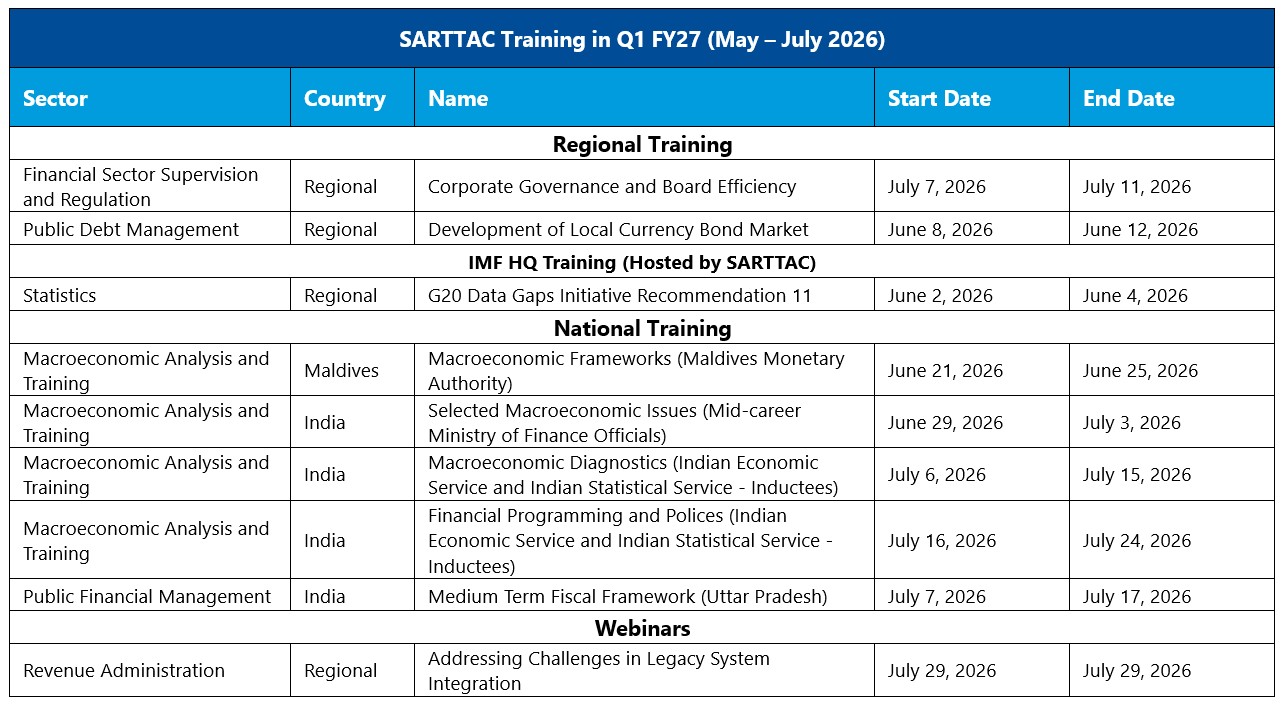
During the first quarter of FY27, SARTTAC delivered a total of 7 training courses, of which 2 were regional courses. In addition, SARTTAC hosted a regional training on Recommendation 11 of the G20 Data Gaps Initiative (June 2-6, 2026; see above <<Link to the G20 DGI section in the highlights>>) and a webinar on digital transformation of revenue administrations (July 29, 2026; see above).
- A regional training on Local Currency Bond Market Development was jointly conducted by the IMF and World Bank in Mumbai, India (June 8-12, 2026). The training brought together officials from finance ministries and central banks across SARTTAC member countries, as well as Lao PDR. The training helped to deepen knowledge of the key building blocks of a local bond market, viz., money market, primary market, secondary market, investor base, legal and regulatory framework and market infrastructure. Hands-on learning included guiding participants to undertake a self-assessment of bond market development in their respective countries using a set of metrics and indicators.
- A regional training in Thimphu, Bhutan (July 7-11, 2026) focused on Local Banking Supervision: Corporate Governance and Board Efficiency. The training delivered actionable insights into board-level management of risk appetite and risk governance. Through a combination of case-studies and interactive sessions, the training equipped participants with the capacity to identify corporate governance risks and apply effective risk mitigation strategies.
- A one-week training on Selected Economic Issues (June 29 – July 3, 2026) was delivered to a mixed group of mid-to-senior level officers from Reserve Bank of India (RBI), Ministry of Finance, and National Institution for Transforming India (NITI) Aayog. The training strengthened participants' ability to comprehensively assess India's macroeconomic situation, including the current state of the economy; the stance of fiscal and monetary policy; financial stability; vulnerabilities in the different sectors; and the medium-term outlook, including the management and sustainability of public debt. The course also discussed other key policy issues such as the goods and services tax, public debt management, public asset management, fiscal risks, and the new national accounts series of India. The course emphasized practical tools for use in day-to-day macroeconomic analysis and related them with Indian data.
- For the first time, SARTTAC offered the Macroeconomic Diagnostics (July 6-15, 2026) and Financial Programming and Policies (July 16-23, 2026) to a joint cohort of IES and ISS probationary officers. The first training focused on establishing the fundamentals of macroeconomic diagnostics by covering aspects such as macroeconomic frameworks, aggregate supply and demand, assessing the monetary and fiscal policy stance, and fiscal and external sustainability. The second training focused on developing a macroeconomic framework comprising the four main macroeconomic sectors (real, fiscal, external, and monetary) and their interlinkages and make projections for key variables, keeping in mind highlighted both accounting consistency and behavioral relationships and used data from India as a case study.
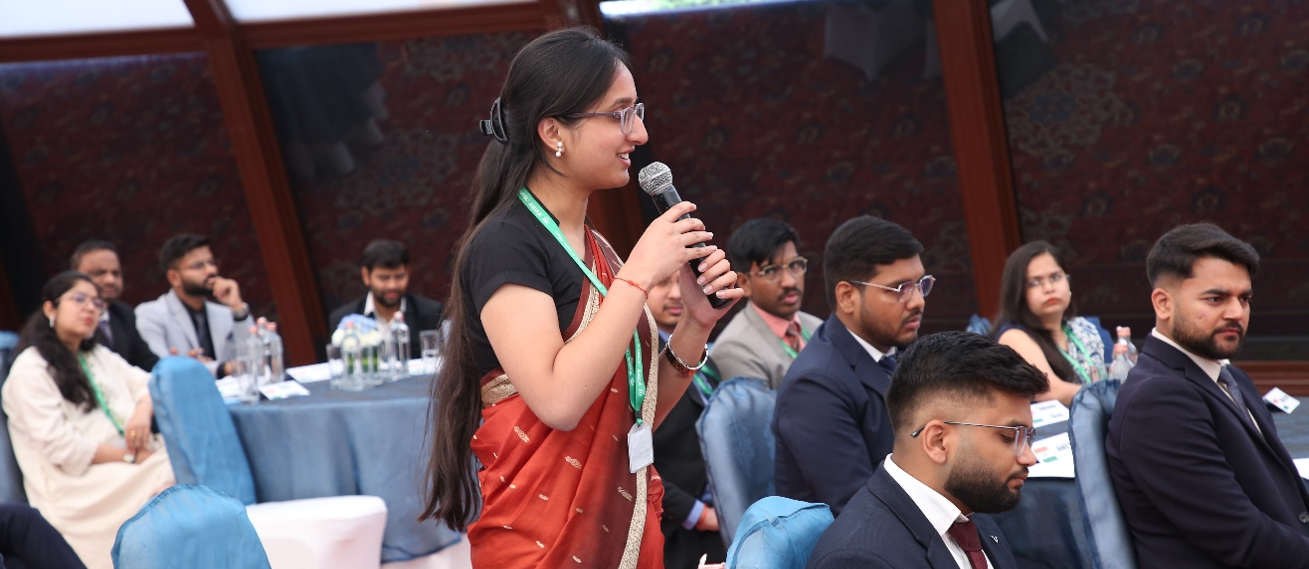
Participants sharing their experience during Macroeconomic Diagnostics (July 6-15, 2026) training for IES and ISS officers
- A customized macroeconomics foundations training was delivered in Maldives (June 21-25, 2026). The training, delivered to participants from Maldives Monetary Authority and the Ministry of Finance, covered key macroeconomic concepts related to four main sectors of the economy – real, fiscal, external and monetary. Intensive workshops using Maldivian data provided local context and helped participants identify key macroeconomic challenges faced by the country.
- In the context of our new project with the Finance Department of the Indian state of Uttar Pradesh, we provided training on the development of a Medium-Term Fiscal Framework (July 7-17, 2026). The training was combined with hands-on development and testing of a fiscal projections tool for the Finance Department. The training covered medium-term fiscal projections, macroeconomic and Gross State Domestic Product forecasting, revenue and expenditure projections, debt, cash and sinking-fund projections for the Department.

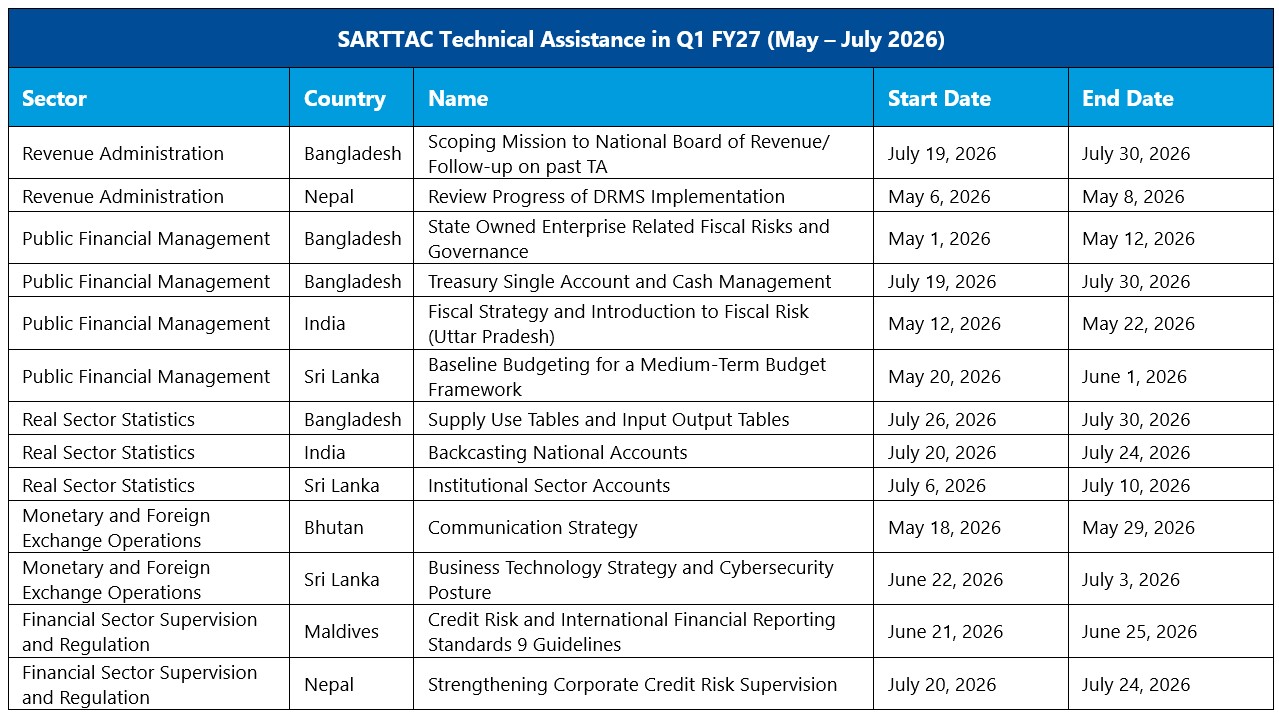
During May-July 2026, SARTTAC delivered 15 TA missions across a range of workstreams in the region.
Bangladesh: SARTTAC delivered four TA activities during the quarter. A mission (July 19–30, 2026) supported the National Board of Revenue in translating earlier diagnostic findings into a sequenced reform program aligned with the country’s Medium- to Long-Term Revenue Strategy (MLTRS), with a focus on revenue administration, compliance management, taxpayer services, digital modernization, and tax policy reforms. A parallel mission to the Ministry of Finance (July 19–30, 2026) supported TSA implementation, cash management, and cash forecasting, while providing practical training to 35 officials on treasury management and IMF’s Cash Forecasting and Analysis Tool (CFAT). Another TA mission (May 1-12, 2026) supported the assessment of SOE-related fiscal risks through the expanded application of the IMF’s SOE Health Check Tool, while also reviewing the SOEs’ institutional arrangements, governance frameworks, and performance monitoring systems. Separately, a mission to the Bangladesh Bureau of Statistics (July 26–30, 2026) advanced preparations for rebasing the national accounts to 2025/26 through work on benchmark Supply and Use Tables, key data sources, and selected national accounts compilation practices.
Bhutan: A TA mission (May 18–29, 2026) engaged with the Royal Monetary Authority on strengthening its strategic communication framework and external communication practices. The mission focused on institutional communication, stakeholder engagement, public outreach, and measures to enhance the effectiveness and transparency of communication with the public and other key stakeholders.
India: Two TA missions were delivered during the quarter. An engagement with the Government of Uttar Pradesh (May 12–22, 2026) supported the development of a Fiscal Strategy Statement and the introduction of fiscal risk management practices to strengthen strategic budgeting. Separately, a mission to the Ministry of Statistics and Programme Implementation (July 20–24, 2026) supported efforts to improve national accounts statistics through GDP backcasting, methodological guidance, and hands-on training for officials.
Maldives: A SARTTAC mission supported the Maldives Monetary Authority to strengthen credit risk supervision and credit assessment practices, including issues related to the implementation of IFRS 9 guidelines (June 21-25, 2026). The mission contributed to ongoing efforts to enhance supervisory capacity and strengthen banking sector oversight.
Nepal: A SARTTAC-sponsored mission (May 6–8, 2026) engaged with the Inland Revenue Department to review progress in implementing the Domestic Revenue Mobilization Strategy (DRMS), discuss future capacity development priorities, and strengthen coordination among development partners supporting revenue administration reforms. Another mission (July 20–24, 2026) worked with the Nepal Rastra Bank to strengthen corporate credit risk supervision and credit assessment practices through technical discussions and practical knowledge-sharing aimed at enhancing supervisory capacity.
Sri Lanka: SARTTAC delivered five TA missions during the quarter covering public financial management, public debt management, central bank operations, and macroeconomic statistics. A mission (May 20–June 1, 2026) engaged with the authorities on baseline budgeting and the development of a medium-term budget framework, contributing to stronger budget planning, expenditure forecasting, and public financial management. In public debt management, building on the successful launch of the Public Debt Management Office (PDMO), which had been achieved with SARTTAC support, a mission (June 16–24, 2026) worked with the new PDMO on operational processes and institutional arrangements supporting debt management reforms, while a subsequent desk-based mission (July 20–August 3, 2026) assisted the authorities in strengthening public debt reporting through enhanced debt bulletins and annual reports. A mission (June 22–July 3, 2026) engaged with the Central Bank of Sri Lanka on business technology strategy and cybersecurity, supporting efforts to strengthen technology governance, institutional resilience, and strategic modernization initiatives. Separately, a mission (July 6–10, 2026) assisted the Department of Census and Statistics in advancing the compilation of Annual Institutional Sector Accounts, including efforts to strengthen data coverage, consistency, and the quality of national accounts statistics.

Initiating engagement with the Indian state of Uttar Pradesh
FY27 Q1 marked the launch of a new public financial management (PFM) engagement between SARTTAC and the Government of Uttar Pradesh, one of India’s largest states.
As part of this multi-year engagement, SARTTAC will work with the Finance Department (FD) of the State to strengthen medium-term fiscal frameworks, identification and monitoring of fiscal risks, and budget and public investment management through a combination of customized training and TA.
The engagement commenced in May with a mission focused on fiscal strategy and fiscal risk management. Working closely with the FD, the mission supported the development of an initial Fiscal Strategy Memorandum and the foundations of a fiscal risk management framework. The work aimed to strengthen strategic budgeting, improve the integration of fiscal policy objectives into budget planning, and introduce a more systematic approach to identifying, assessing, and managing fiscal risks.
A second mission followed in July to support the development of a practical Medium-Term Fiscal Framework (MTFF). The mission focused on strengthening fiscal forecasting, medium-term fiscal projections, fiscal target setting, and scenario analysis, while helping officials develop the analytical tools needed to support credible and forward-looking fiscal planning.
Together, these initial missions have established the foundations for a broader reform agenda to enhance fiscal discipline, transparency, and resilience. The partnership also reflects SARTTAC’s continued commitment to supporting subnational fiscal reforms and strengthening public financial management institutions across India’s states.
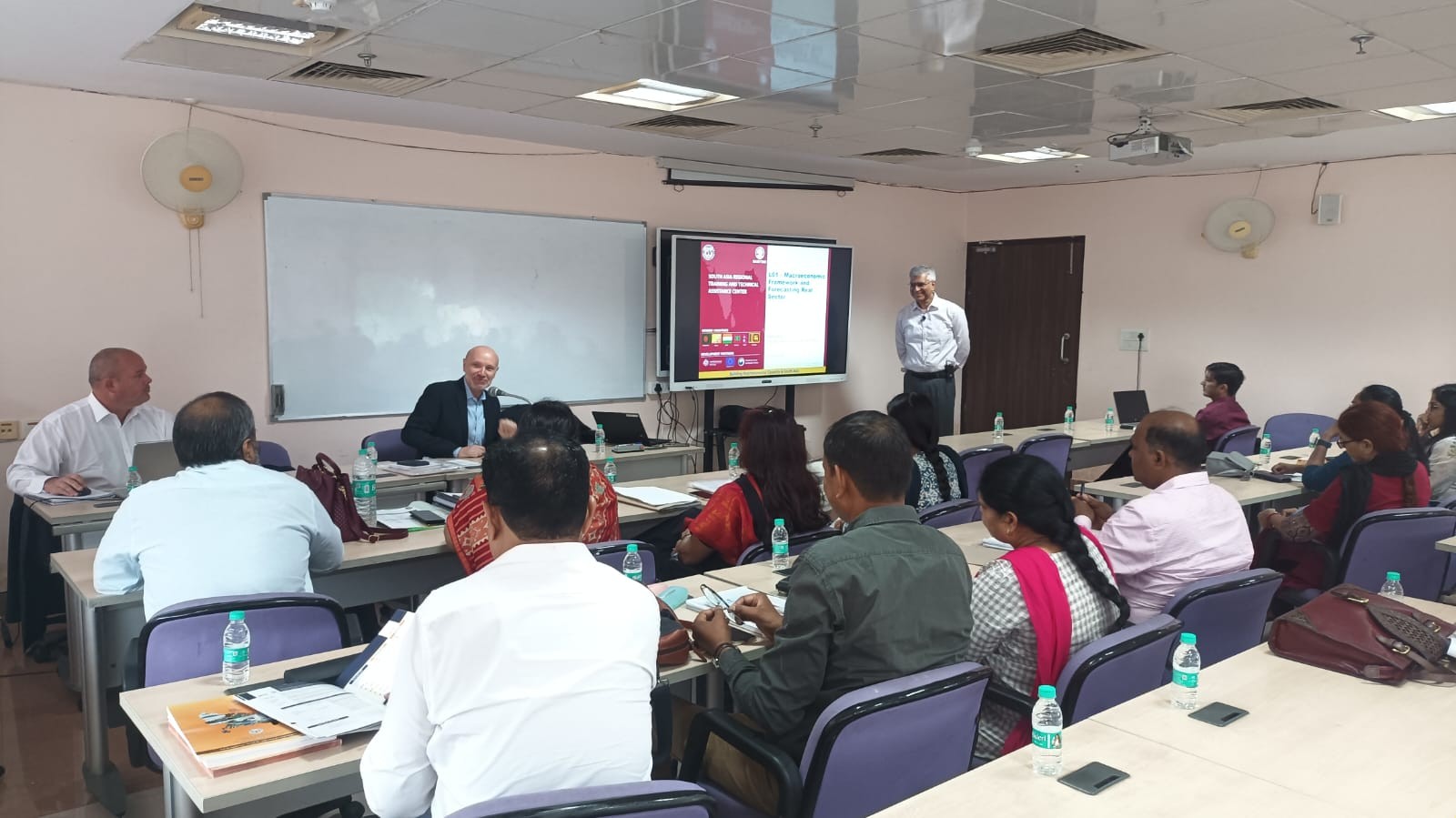 Sub-national engagement with the Indian State of Uttar Pradesh
As part of its continued support to Bangladesh's public financial management reform agenda, SARTTAC delivered two important technical assistance missions focused on State-Owned Enterprise (SOE) fiscal risks and governance and Treasury Single Account (TSA) and cash management reforms. Both areas have become increasingly important as Bangladesh seeks to strengthen fiscal sustainability, improve public sector governance, and advance reforms under its IMF-supported ECF/EFF program and the related structural benchmark targets.
The May 2026 mission on SOE-Related Fiscal Risks and Governance supported the enhancement of the Fiscal Risk Statement and helped strengthen Ministry of Finance oversight of SOE performance and fiscal risks through the expanded use of the IMF's SOE Health Check Tool and the State-owned Enterprises, Autonomous Bodies, Budget, Reporting and Evaluation System (SABRE+) monitoring platform. The mission helped broaden quantitative assessment of SOE fiscal risks and identified vulnerabilities concentrated in a small number of large enterprises, particularly in the energy and utility sectors. The work builds on ongoing IMF and SARTTAC support to fiscal risk management and complement reforms under the IMF-supported program, including the recent SOE sectorization exercise that was a structural benchmark under the ECF/EFF arrangement. Future support will focus on strengthening SOE oversight capacity, improving fiscal risk analysis and disclosure, and supporting the authorities' broader SOE reform agenda.
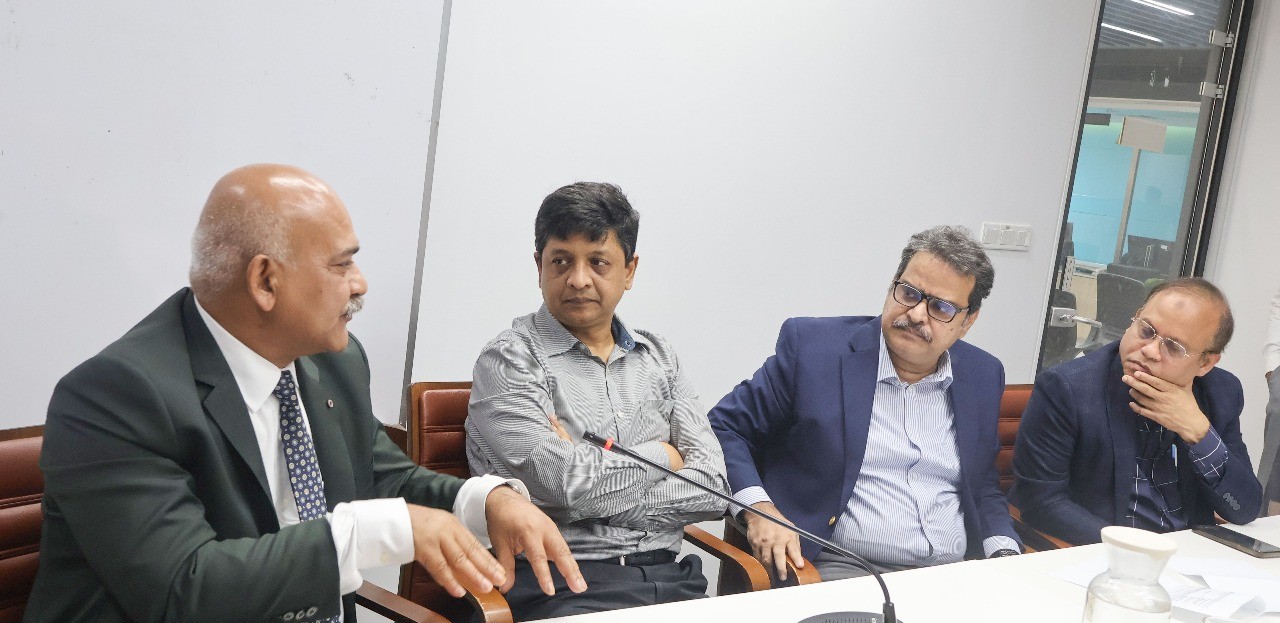 Focused discussion as part of Technical Assistance mission
In July 2026, SARTTAC also provided follow-up assistance on TSA and Cash Management. The mission reviewed progress in expanding TSA coverage, implementation of electronic funds transfers (EFT), digital revenue collection through A-Challan, and cash forecasting arrangements. These reforms are also closely linked to IMF program objectives and related structural benchmarks aimed at strengthening treasury management and increasing the use of electronic government transactions. While significant progress has been made in improving visibility over government cash resources and modernizing treasury operations, further work is needed to achieve effective cash consolidation and institutionalize cash forecasting. Going forward, SARTTAC will continue supporting implementation of the TSA reform roadmap, expansion of TSA coverage, and stronger treasury governance to help Bangladesh achieve more efficient cash management and budget execution.
A SARTTAC mission to the Ministry of Statistics and Programme Implementation (MoSPI), India, (July 20–24, 2026), supported the authorities in backcasting the national accounts. Previous SARTTAC missions had supported MoSPI in the successful rebasing and methodological upgrade of the national accounts launched in February 2026. The July mission assisted in the process of establishing a consistent historical time series of the new national accounts, targeted to be published by December 2026. It reviewed the methodologies and data sources for annual GDP by production and expenditure and recommended methods for backcasting the revised annual estimates. The resulting consistent annual and quarterly GDP series will support economic analysis, modelling, and forecasting. SARTTAC will continue its engagement with MoSPI through TA, training, and regular virtual seminars to strengthen the quality and consistency of macroeconomic statistics and support well-informed fiscal and monetary policy analysis and decision-making.
For the first time, newly recruited officers of the Indian Statistical Service (ISS) participated in the annual Financial Programming and Policies and Macroeconomic Diagnostics training programs conducted for the new recruits of the IES. Being responsible for producing, standardizing, and disseminating official statistics, including national accounts, inflation measures, and census and survey data, the ISS plays a central role in India's statistical system. The two training programs provided participants with a solid grounding in key macroeconomic concepts. Hands-on workshops using Indian data offered a user-oriented perspective on macroeconomic statistics and the linkages across different sectors, thereby helping officers better appreciate the broader macroeconomic context of the data they will contribute to producing in the future.
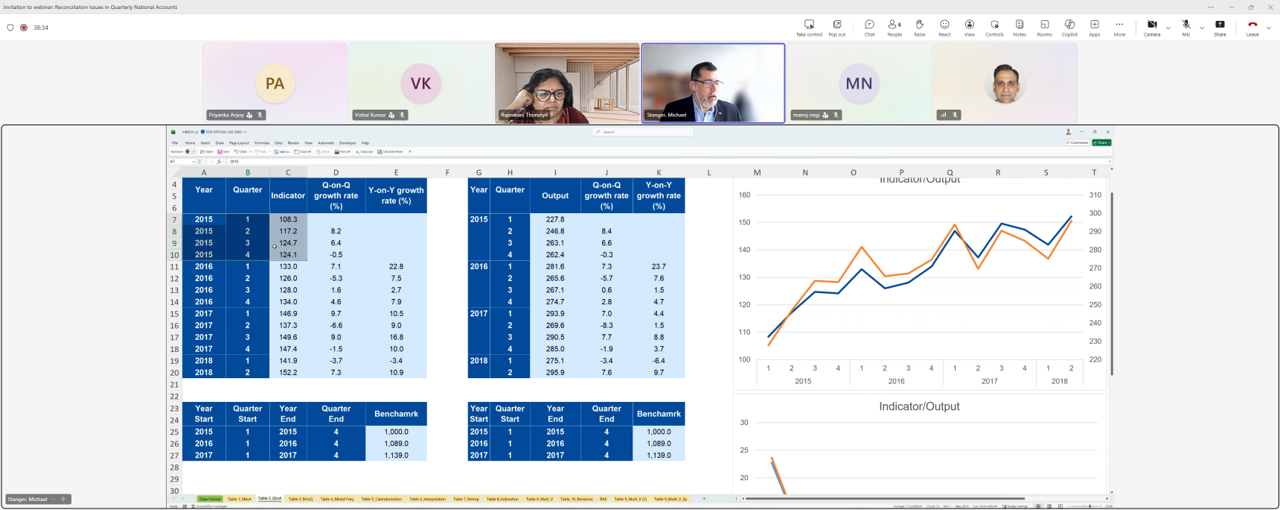
MOSPI Webinar on Reconciliation Issues in Quarterly National Accounts
SARTTAC organized a joint IMF–World Bank regional workshop on Local Currency Bond Market (LCBM) Development in Mumbai from June 8–12, 2026, bringing together 30 officials from Ministries of Finance and Central Banks across SARTTAC member countries and Lao PDR for practical learning and exchange of country experiences. Using the IMF–World Bank diagnostic framework, participants assessed the development of their domestic bond markets against enabling conditions and six key building blocks: money market, primary market, secondary market, investor base, financial market infrastructure, and legal and regulatory framework. An Excel-based diagnostic tool, complemented by technical sessions, practical exercises, and country discussions, helped participants identify market-development gaps, determine reform priorities, and learn from regional experiences.
The workshop was part of the broader agenda to deepen domestic capital markets, expand local-currency financing options, and strengthen financial resilience. It delivered measurable learning gains, with a 17-percentage-point improvement in pre- and post-course assessment results. Participants rated the knowledge and skills acquired, relevance of the content, and overall experience at an average of 4.7 out of 5, particularly valuing the practical diagnostic framework and peer learning opportunities.
The workshop was supported by funding from the Government of Japan and the multi-donor Debt Management Facility (DMF).
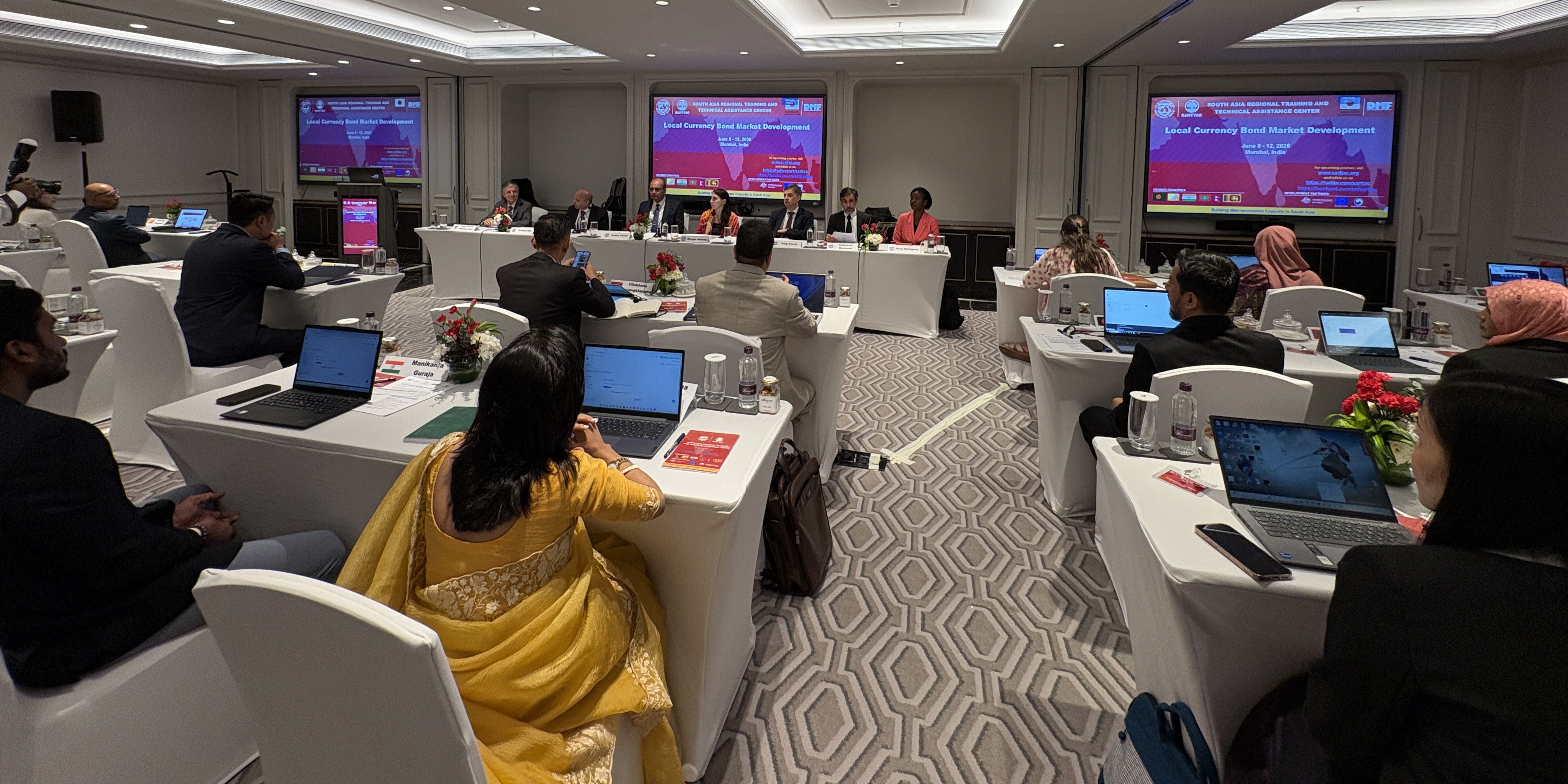 Regional course on Local Currency Bond Market (LCBM) Development in Mumbai
June 8–12, 2026
SARTTAC, supported by the Royal Monetary Authority of Bhutan, held a five-day regional seminar in Thimphu (July 6-10, 2026). It trained bank supervisors how to assess whether bank risk governance works in practice and how to implement new updates in corporate governance frameworks. It concentrated on three potential areas for improvement: ineffective risk governance, misaligned remuneration practices, and related party transactions. Strengthening governance in these areas helps prevent excessive risk-taking and conflicts of interest, ultimately contributing to safer banks and a more resilient financial system.
The seminar started with the role of bank boards in setting how much risk a bank is willing to take and establishing a culture of responsible risk management. Sessions covered what supervisors should expect from boards, how to assess whether board members have the right skills and experience, and how risk appetite is put into practice through the chief risk officer, internal audit, and compliance. Participants learned how to use information from these functions in off-site monitoring and on-site examinations.
The seminar also examined two areas where governance weaknesses can be particularly important: how bankers are paid and how banks deal with related parties. Participants explored how pay and performance incentives can encourage excessive risk-taking, and how banks should identify and monitor transactions involving owners and other related parties, especially where complex ownership structures make risks harder to detect.
Case studies allowed participants to apply these lessons. In a final exercise, they selected tools from the course and explained how these could strengthen supervision in their jurisdictions. The seminar equipped supervisors with practical ways to spot governance problems earlier and act before weak oversight, poor incentives, or hidden related-party exposures create larger risks.
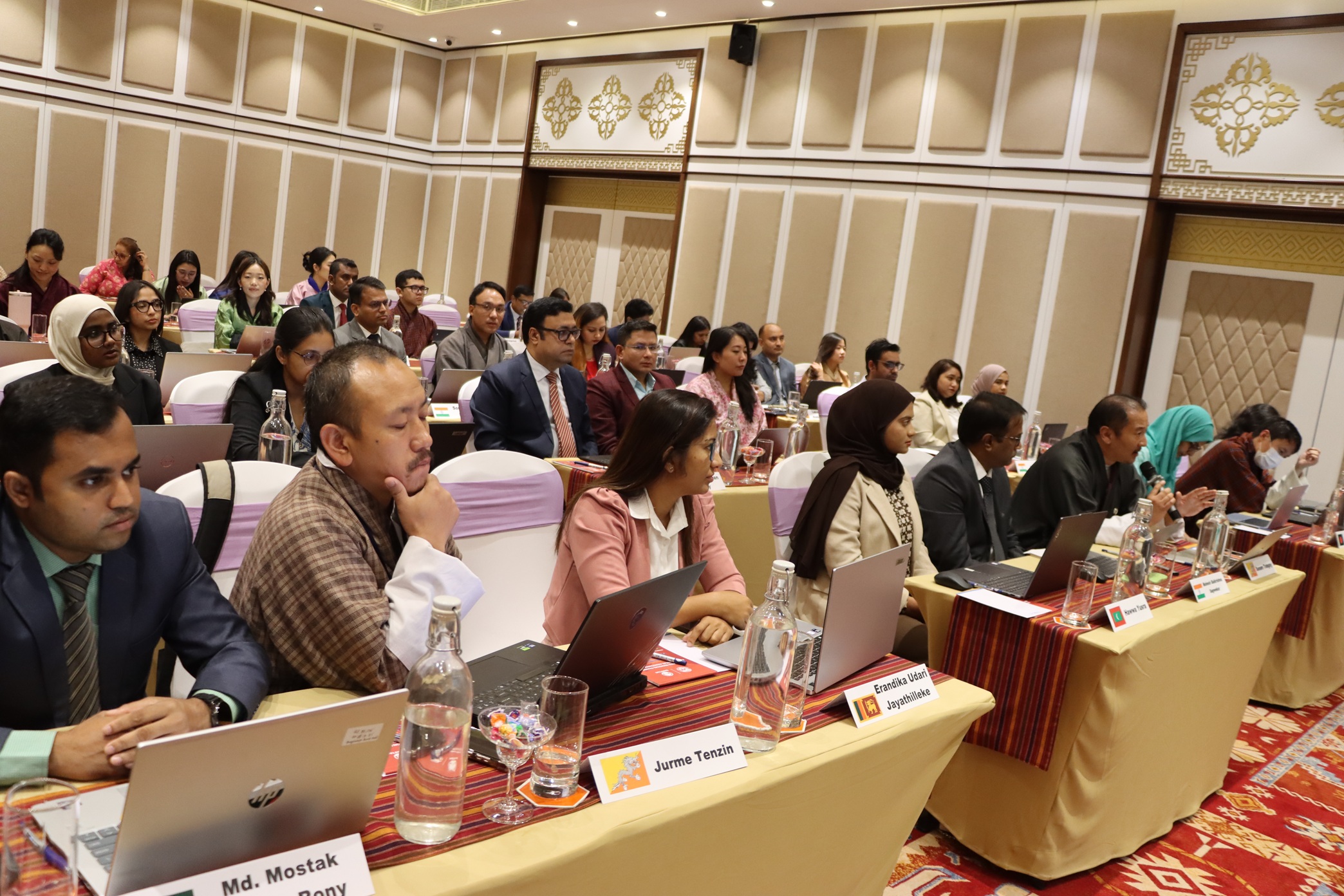 Participants engaged in interactive learning in the regional seminar
From June 22 to July 3, 2026, SARTTAC, jointly with experts from the IMF’s Information Technology Department (ITD), delivered a TA mission to the Central Bank of Sri Lanka (CBSL) on Business Technology Strategy (BTS), cybersecurity, and operational resilience. BTS is a multi-year, business-aligned framework that helps central banks translate their strategic objectives into technology priorities, investments, and governance arrangements, ensuring that technology supports institutional mandates and business needs.
The mission supported CBSL in developing the foundations of its BTS, strengthening technology governance, and assessing cybersecurity and operational resilience capabilities. Through workshops and diagnostic assessments, the mission helped identify priorities for digital transformation, cyber resilience, and emerging technologies such as cloud computing and artificial intelligence. The work builds on SARTTAC’s ongoing support to CBSL in risk management, governance, compliance, and operational resilience and contributes to the Bank’s broader modernization agenda. Looking ahead, SARTTAC and IMF ITD plan to continue supporting CBSL in finalizing and implementing the BTS and strengthening cybersecurity and operational resilience capabilities.



More articles from the same issue
A Focus on Technical Assistance
- Initiating engagement with the Indian state of Uttar Pradesh
- Bangladesh: Strengthening Fiscal Resilience through SOE Reforms and Treasury Modernization
- Deeper engagement with Ministry of Statistics and Programme Implementation, India
- SARTTAC Regional Workshop Strengthens Capacity on Local Currency Bond Market Development
- Strengthening Supervisory Assessment of Corporate Governance and Board Effectiveness
- Sri Lanka: Strengthening Technology Strategy and Cyber Resilience
- Summary of Operations in Q1 FY27
- Training and Webinars
- Technical Assistance
- Activities under the Public Debt Management Program funded by the Japan
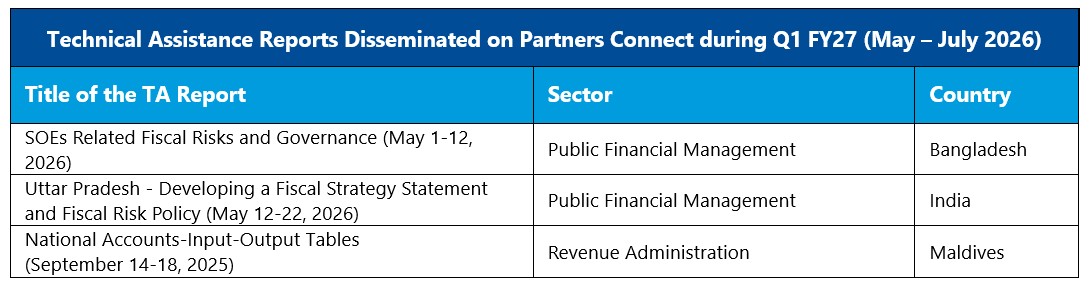
- Technical Assistance Reports Disseminated on Partners Connect during FY27 Q1
SARTTAC Training Calendar FY27 (May 2026 - April 2027)
- SARTTAC Website
- Staff Members
- Follow @IMF-SARTTAC on LinkedIn
- Follow @IMFSARTTAC on Facebook
- Follow @SARTTAC on X
Previous Issues <
